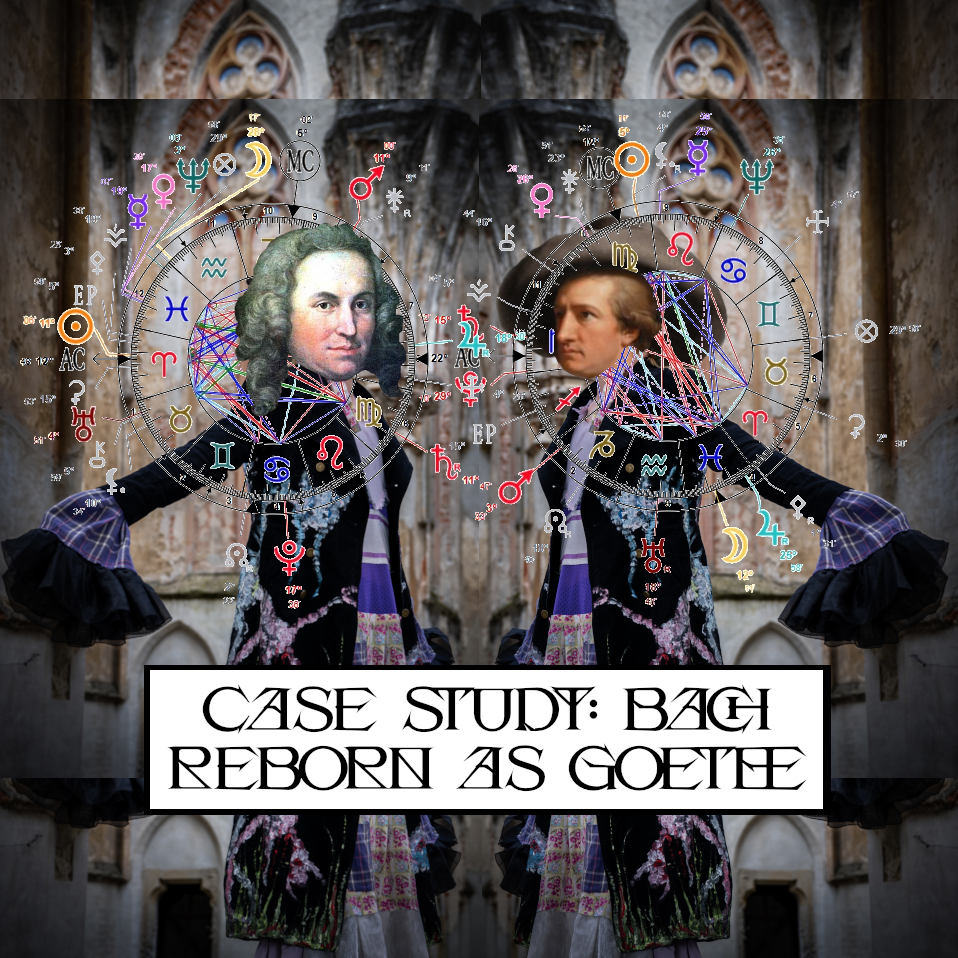
While astrology alone cannot prove that Johann Sebastian Bach reincarnated as Johann Wolfgang von Goethe, when combined with psychic insights from the Akashic Records and a deep past life reading I conducted, it presents a compelling case.
This discovery arose through a deep intuitive connection, striking me with poetic irony given Goethe’s crucial role in reviving Bach’s musical legacy. Could Goethe’s lifelong passion for structure, form, and transcendence — so aligned with Bach’s — indicate a shared soul journey?
In this analysis, I will explore their natal charts focusing on karmic wounds and placements, and soul patterns. The goal is to trace the possible reincarnational arc from Bach, the devoted musical architect, to Goethe, the universal poetic philosopher — weaving together astrology and psychic insight to reveal a deeper truth.
Note on timing: Some may point out that Goethe was born in 1749, while Bach didn’t die until 1750 — raising questions about the mechanics of reincarnation. In esoteric traditions, this can be understood through the concept of a “walk-in soul.” In this case, the original soul in Goethe’s newborn body may have been a kind of placeholder — “keeping it warm,” so to speak — until Bach’s soul was ready to step in. This is sometimes done when the incoming soul has a very specific mission and needs a precise setup in terms of family, location, or astrology. The actual walk-in mostly happens early in life, often marked by a shift in perception, intensity, or purpose. Seen this way, Goethe’s birth slightly before Bach’s death doesn’t contradict the soul connection — it may, in fact, affirm its urgency.
Johann Sebastian Bach
Johann Wolfgang von Goethe
I am certain that I have been here as I am now a thousand times before, and I hope to return a thousand times.
-Johann Wolfgang von Goethe
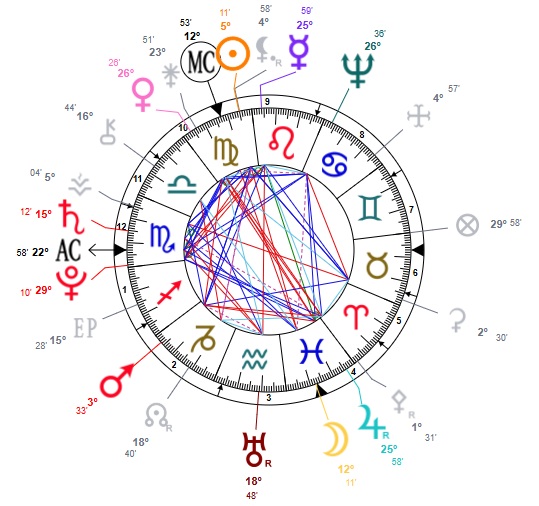
Table of Contents
1. Goethe’s Soul Task: Capricorn in the Second House
2. Bach’s Karmic Conflict: The T-Square and Its Release
3. From Fusion to Form: Did Bach Complete His Task?
4. Goethe’s Turn: From Emotional Intensity to Sovereign Form
5. Soul Mirrors: Bach’s Eighth House, Goethe’s Second
6. Tension and Resolution: Goethe’s T-Square and Evolution
7. The Gemini Thread: Communication and Self-Worth
8. Grounded Legacy: The Grand Earth Trines
9. Shared Wounds, Different Healing: Chiron, Lilith, and Karma
10. An Evolution in Brief: From Bach to Goethe
11. From Sacred Service to Spiritual Embodiment
1. Goethe’s Soul Task: Capricorn in the Second House
Goethe’s North Node sits in Capricorn, in the 2nd house. This suggests a life purpose centered around building material self-reliance, mastering earthly structures, and cultivating responsibility and inner authority. It’s about moving away from emotional dependency and into tangible self-worth and autonomy — literally creating value in the world, not just feeling it.
This is striking when we compare it to Bach’s chart. The karmic groundwork is already visible in several ways.
2. Bach’s Karmic Conflict: The T-Square and Its Release
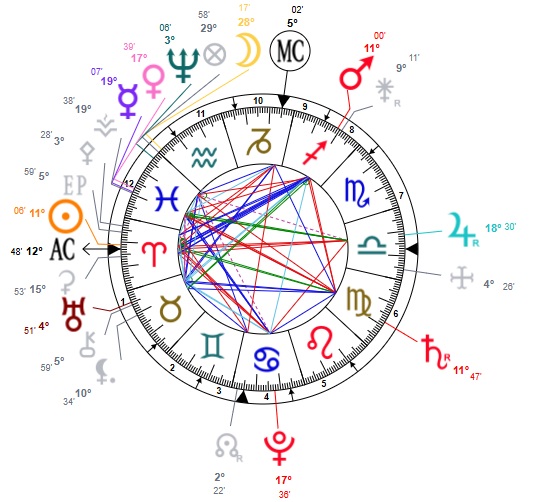
In Bach’s chart, we find a powerful T-square configuration:
- Pluto in Cancer, 4th house (17°)
- Jupiter in Libra, 7th house (18°)
- Sun in Aries, 1st house (11°), conjunct Ascendant in Aries (12°)
This forms a high-tension triangle, where Pluto squares both Jupiter and the Sun/Ascendant, and the Sun opposes Jupiter. Such a configuration often signals intense inner conflict and pressure, demanding eventual resolution.
Pluto in Cancer (4th house) represents intense transformation around family, ancestry, emotional security, and inner foundations. There may have been a deep need to resolve karmic familial patterns or hidden psychological pain.
Jupiter in Libra (7th house) suggests expansive energies focused on relationships and harmony, but the square with Pluto hints at power struggles, projection, or dependency within partnerships.
Sun in Aries (1st house), especially conjunct the Ascendant, shows strong individuality, identity, and drive — but squaring Pluto can imply ego death, suppression of self-expression, or needing to assert one’s self despite emotional or relational intensity.
The “release point” of this T-square — the place where the tension can be integrated — lies in Capricorn, 10th house, the point directly opposite Pluto in Cancer. This is the house of career, public contribution, structure, and worldly legacy.
This placement clearly demanded that Bach direct his emotional-intuitive energy (Cancer/Pluto) into practical, public structures (Capricorn/10th house). And indeed, Bach did just that — embedding the divine into structured music, elevating spiritual emotion into precise, earthly form.
The soul of man is like to water; from Heaven it cometh, to Heaven it riseth.
And then returning to earth, forever alternating.– Johann Wolfgang von Goethe
Did Bach “Succeed” in Resolving the T-Square?
The karmic story becomes even more layered when we look at Bach’s own North Node, which is in Cancer — the opposite sign of Goethe’s Capricorn node. This suggests Bach was learning emotional integration, sensitivity, family connection, and perhaps breaking free from rigid structures. It seems Bach was being asked to balance his public drive with inner emotional awareness.
3. From Fusion to Form: Did Bach Complete His Task?
So did he succeed? Probably not completely — as his next life, Goethe, now takes on the Capricorn North Node: the very axis Bach had to integrate. This suggests that while Bach may have strongly developed his Cancerian emotional depth, especially through family life, the soul’s next step was to master the opposite pole: Capricorn’s structured autonomy and external legacy.
Looking closer at Bach’s life, we see Cancerian themes everywhere — particularly around family, caretaking, and emotional bonds. He had 20 children, though only 10 survived to adulthood. He worked closely with his second wife, Anna Magdalena, who was not only a devoted partner but also a trained musician and copyist. Together, they collaborated on compositions, organized musical manuscripts, and nurtured a shared creative household. This reflects a deeply Cancerian impulse: to weave the personal and professional, home and vocation, into one emotionally cohesive life.
Yet, there was a cost. Bach was chronically overworked, juggling multiple demanding roles — as composer, cantor, teacher, and performer — often producing staggering amounts of music in very short periods. Though this might appear Capricornian on the surface, it was emotionally driven: a sense of devotion, duty, and perhaps self-worth tied to service. Instead of building independent structures (Capricorn), he may have absorbed the emotional needs of his environment (Cancer) — sacrificing personal boundaries for familial and divine obligations.
4. Goethe’s Turn: From Emotional Intensity to Sovereign Form
Fast-forward to Goethe, and we see the soul making a conscious pivot. Born with a North Node in Capricorn in the 2nd house, his task was to develop inner authority, self-sufficiency, and external structure — to move from emotional fusion to sovereign form.
And he did. While Goethe began as a romantic poet, known for his emotional intensity and deep involvement in love affairs (very South Node Cancer/8th house flavored), he later underwent a profound transformation. He turned his focus toward scientific inquiry, mineralogy, color theory, anatomy, and botany. He systematized his thinking, withdrew from emotional entanglements, and built a legacy rooted in objectivity, mastery, and long-term contribution — all themes of Capricorn and the 2nd house.
Anyone who works as I do will succeed as I do.
― J. S. Bach
This transition wasn’t just a career shift — it reflects a karmic realignment. Where Bach may have lost himself in caretaking and creative devotion, Goethe sought personal order, sovereignty, and structured thought, perhaps in response to that earlier imbalance. It’s the soul saying:
“Now I must build something that endures beyond emotion.”
Let’s now look deeper into Goethe’s South Node in the 8th house, and how that karmic past shows up in Bach’s chart.
5. Soul Mirrors: Bach’s Eighth House, Goethe’s Second
In Bach’s chart, we find:
Mars in Sagittarius (8th house, 11°) conjunct Juno (9°) — a signature of intense emotional entanglement and transformative partnerships. This reflects his deep fusion with Anna Magdalena Bach, who was not just his spouse but his soul counterpart (Twin Flame) and creative partner. Their relationship embodies the 8th house themes of shared resources, emotional merging, and karmic soul bonds—a sacred union charged with deep spiritual and emotional interconnection.
This Mars–Juno conjunction forms a T-square with:
- Saturn in Virgo (6th house, 11°) — symbolizing duty, hard work, and the burden of caretaking.
- Venus in Pisces (12th house, 17°) — representing idealized love, beauty through sacrifice, and hidden emotional longing.
Additionally, Juno squares Neptune in Pisces (12th house, 3°) — suggesting romantic or spiritual projection, and possibly mutual illusions or sacrifices within this deeply entwined marriage.
This creates a tense configuration, where:
- Mars square Saturn signals frustrated action and physical overexertion — the struggle of constantly working for others, often at the cost of one’s vitality (6th house).
- Mars square Venus reveals a tension between desire and devotion — a drive for truth and expansion (Sagittarius) versus a longing for surrender and beauty (Pisces).
- Juno square Neptune highlights the potential for romantic idealism to obscure reality — a “divine union” that, while sacred, may have required personal sacrifice or lacked groundedness.
And yet, this entire network orbits around the 12th house, which contains a powerful stellium in Pisces:
- Venus (17°)
- Neptune (3°)
- Mercury (19°)
- Vesta (19°)
This points to a life steeped in creative mysticism, selfless service, and emotional dissolution — a kind of devotional artistry that consumes the ego in favor of the divine.
But we must not forget the Aquarian edge of this 12th house, where we also find:
- Moon in Aquarius (28°)
- Part of Fortune in Aquarius (29°)
Though technically not in Pisces, these points deepen the emotional and spiritual focus of the 12th. The Aquarius Moon adds an element of emotional detachment, visionary idealism, or service to humanity through non-personal channels (like music). Conjunct the Part of Fortune, it suggests that Bach’s fulfillment came through spiritual isolation, mystical creativity, and transcendent contribution — though perhaps at the cost of direct emotional connection or material satisfaction.
So where does this 8th–12th house pressure seek resolution?
The release point of the T-square is found in Gemini in the 2nd house — the very house of Goethe’s North Node.
This is significant. It indicates a soul directive to:
- Leave behind emotional enmeshment (8th house),
- Transcend the illusion of spiritual martyrdom (12th house),
- And move toward clear communication, practical self-worth, and independent thought (2nd house Gemini).
This frames Goethe’s soul journey beautifully: in his later life, he shifted from lyrical romanticism to rigorous scientific inquiry — not just as a stylistic change, but as a karmic course correction.
Where Bach may have become lost in relational devotion and mystical absorption, Goethe took the next step: building structure, cultivating mental clarity, and claiming personal authority.
He wasn’t just working — he was constructing a self. Stone by stone. Thought by thought. A life no longer surrendered to the tides of feeling, but designed through form, logic, and intentional creation.
Before we explore Goethe’s Gemini/3rd house placements—the release point of Bach’s T-square—I want to first examine Goethe’s own T-square configuration in depth. This pattern not only mirrors Bach’s chart but seems to respond to his karmic life path on a profound level.
6. Tension and Resolution: Goethe’s T-Square and Evolution
In Goethe’s chart, the T-square involves:
- Mars in Capricorn, 2nd house, 3°, positioned near his North Node at 18°
- Venus conjunct Juno in Virgo, 10th house, 26°
- Jupiter in Pisces, 4th house, 25°
- Pallas in Aries, 4th house, 1°
Mars squares Jupiter and Pallas, while Venus and Juno oppose both Jupiter and Pallas. The release point of this tension lies in Cancer, 8th house.
This configuration reveals Goethe’s drive toward disciplined, purposeful action (Mars in Capricorn) focused on securing material and intellectual legacy (2nd house), yet challenged by his emotional and spiritual roots (Jupiter and Pallas in the Pisces 4th). Venus conjunct Juno in Virgo, in the public-oriented 10th house, blends themes of partnership, love, and ambition with a strong sense of service, detail, and practical responsibility. The opposition between Venus/Juno and Jupiter/Pallas highlights Goethe’s ongoing balancing act between ambition and idealism, public achievement and private emotional depth.
Biographical reflections of the T-square:
Mars in Capricorn in the 2nd house aligns with Goethe’s lifelong dedication to methodical work and legacy-building. Unlike Bach, who was consumed by musical devotion and family responsibilities, Goethe transitioned from poetic romanticism toward scientific inquiry, notably in anatomy, botany, and color theory. These pursuits reflect Capricorn’s qualities of persistence and systematic achievement aimed at lasting intellectual contribution.
Jupiter (Pisces) and Pallas (Aries) in the 4th house, evoke Goethe’s deep yet often conflicted emotional connection to his roots and family. His mother’s nurturing shaped his early education and literary passion, while his intense but complex relationship with Charlotte von Stein reflects Piscean themes of emotional sensitivity, spiritual yearning, and blurred boundaries within the home.
Venus conjunct Juno in Virgo in the 10th house brings practical precision and a sense of service to Goethe’s ambitions and partnerships. His public roles in Weimar’s court illustrate his success in social recognition, yet this practical drive sometimes clashed with his inner emotional world, as indicated by the opposition to Jupiter and Pallas.
The parallel in Bach’s chart and life:
Bach’s Mars conjunct Juno in Sagittarius, 8th house symbolizes a passionate karmic union with Anna Magdalena, his soul counterpart. Their relationship was intensely creative and transformative but also marked by sacrifice—Bach fathered 20 children (many of whom died young), taking on immense emotional and familial responsibility.
The T-square involving Saturn in Virgo (6th house), Venus in Pisces (12th house), and Mars-Juno in Sagittarius (8th house) exposes Bach’s tension between rigorous daily labor, mystical devotion, and the demands of his emotional and spiritual partnerships. Bach was both a dedicated family man and prolific composer whose music served religious and emotional nourishment.
His Pisces stellium in the 12th house—including Venus, Neptune, Mercury, and Vesta—alongside Moon and Part of Fortune in Aquarius (also in the 12th), highlights Bach as a devotional mystic and spiritual channel. This sensitivity came at the cost of personal boundaries and physical hardship. Bach’s reserved, humble nature amid personal tragedies underscores this.
The release point and the soul’s evolution:
Bach’s T-square release point falls in Gemini, 2nd house, where Goethe’s North Node resides—symbolizing the soul’s evolution toward clearer self-expression, practical self-worth, and personal authority.
Goethe’s life reflects this evolution:
- Moving away from Bach’s deep emotional devotion and sacrificial mysticism toward rational structure, self-sovereignty, and intellectual mastery.
- Shifting from romantic poetry to systematic scientific work (Theory of Colours), challenging established norms and creating lasting knowledge.
- Building an enduring social legacy as a cultural leader in Weimar, reflecting Mars in Capricorn and Venus-Juno in Virgo’s disciplined, service-oriented creativity.
Goethe’s release point in Cancer, 8th house brings the karmic cycle full circle—consciously embracing emotional depth and transformation, integrating soul and structure rather than being overwhelmed.
Summary:
Bach’s soul embodies devotional mysticism, emotional fusion, and creative sacrifice through intimate partnership.
Goethe’s soul responds by constructing order, cultivating independence, and transforming emotional depth into enduring intellectual legacy.
Their karmic dance traces the soul’s journey from immersive emotional unity toward conscious mastery and self-creation—a path of evolution and awakening.
Music is liquid architecture; architecture is frozen music.
-Johann Wolfgang von Goethe.
7. The Gemini Thread: Communication and Self-Worth
Since Gemini in Bach’s 2nd house is the release point of his powerful T-square, it’s illuminating to explore how Gemini and related energies appear in Goethe’s chart. Goethe has no planets directly in Gemini, but Gemini’s ruling planet, Mercury, is strongly activated in his 9th house in Leo. Importantly, Goethe also has Uranus in Aquarius in the 3rd house—the natural domain of Gemini—forming a dynamic T-square with Mercury and his Scorpio Ascendant.
This Mercury-Uranus tension, squared to Scorpio Ascendant, is pivotal to understanding how Goethe’s chart echoes and transforms the karmic challenges that Bach’s T-square reveals. The release point of this T-square lies on Goethe’s Descendant in Taurus, mirroring Bach’s Taurus-ruled 2nd house release.
Goethe’s T-square involving Mercury (Leo 9th house) and Uranus (Aquarius 3rd house):
- Goethe’s Mercury in Leo, 9th house (25°) opposes
- Uranus in Aquarius, 3rd house (18°),
- Both squaring his Scorpio Ascendant (22°).
Additional squares include:
- Mercury square Pluto in Scorpio, 1st house (29°)
- Uranus square Saturn in Scorpio, 12th house (15°).
Astrological meaning of this configuration:
- Mercury in Leo (9th house) channels Gemini’s curiosity and communication through dramatic, expansive, philosophical themes—expressing a personal vision with flair and authority.
- Goethe’s early literary success, “The Sorrows of Young Werther,” captures this bold, emotional self-expression challenging social conventions.
- Uranus in Aquarius (3rd house) brings innovative, rebellious, and future-oriented mental energy, emphasizing originality in communication and ideas.
- Goethe’s later scientific and esoteric work (e.g., color theory) exemplifies this unconventional intellectual streak.
- The Mercury-Uranus opposition embodies a tension between individual creative expression and collective ideals, tradition and innovation.
- Their squares to Scorpio Ascendant, Pluto, and Saturn infuse Goethe’s persona and expression with themes of psychological transformation, power struggles, and karmic responsibility.
- His lifelong inner battles with identity and shadow aspects are reflected here.
- The Taurus Descendant release point suggests Goethe’s need to find grounding, stability, and tangible partnerships, balancing mental restlessness with steady relational support.
Echoes in Bach’s chart and life
- Bach’s chart centers on Pisces and 12th house energies, emphasizing mysticism, emotional surrender, and spiritual devotion.
- His Mars-Juno conjunction in Sagittarius in the 8th house highlights deep emotional and karmic fusion, especially with Anna Magdalena Bach, his creative and spiritual partner.
- Goethe’s Scorpio Ascendant and planets in Scorpio (Pluto, Saturn) resonate strongly with Bach’s 8th house Mars-Juno, reflecting shared themes of intense emotional transformation and committed partnerships.
- While Bach’s T-square channels emotional and mystical tensions, Goethe’s Mercury-Uranus T-square reflects mental rebellion, intellectual breakthroughs, and confronting deep psychological patterns.
- Both charts culminate in grounding energies: Bach through the Gemini-ruled 2nd house (practical communication and material stability), Goethe through the Taurus Descendant (stable relationships and concrete values).
Biographical reflections
- Bach’s life was devoted to family, tradition, and devotional service, embodying karmic responsibility through intense creative output and spiritual vocation. His emotional and physical stamina to care for family underlines his chart’s heavy Scorpio-Taurus axis.
- Goethe’s life involved a quest to define identity and philosophy amid psychological and societal pressures.
- His Scorpio Ascendant and Pluto emphasize profound self-transformation and power struggles.
- The Mercury-Uranus opposition corresponds to his intellectual innovations and break from Enlightenment rationalism, exploring visionary and esoteric realms.
- The tension between Leo Mercury’s expressive ego and Aquarius Uranus’s social idealism shows his complex creative communication.
- The Taurus Descendant release in Goethe’s chart signals his eventual turn toward grounding ideas through stable partnerships and social acceptance, paralleling Bach’s rootedness in family and community.
Summary
- Bach’s karmic, emotional tensions (Mars-Juno Sagittarius 8th house, Pisces 12th house focus) find a mental and psychological counterpart in Goethe’s Mercury-Uranus T-square with Scorpio Ascendant.
- Bach’s path centers on devotional emotional fusion and spiritual surrender, while Goethe’s involves intellectual freedom, psychological depth, and self-structuring amid inner tension.
- Both charts emphasize the importance of grounding and relational stability—Bach through Gemini 2nd house communication, Goethe through Taurus Descendant partnerships.
- Their astrological interplay highlights complementary soul missions: Bach’s mystical emotional devotion balanced by Goethe’s innovative psychological mastery.
As long as you are not aware of the continual law of Die and Be Again, you are merely a vague guest on a dark Earth.
– Johann Wolfgang von Goethe
More Clues: Bach’s Midheaven in Capricorn
Bach’s Midheaven (MC) is also in Capricorn, reinforcing the soul’s strong vocational mission related to discipline, form, and legacy. The Midheaven is the most public point in the chart — and with Capricorn here, there was a karmic drive toward lasting contribution, mastery, and perhaps even societal status through work.
This echoes Goethe’s Capricorn North Node: the next stage of the soul’s integration of this energy.
8. Grounded Legacy: The Grand Earth Trines
Now let’s look at the grand earth trine in Bach’s chart:
- Chiron in Taurus, 1st house (5°)
- Uranus in Taurus, 1st house (4°)
- Saturn in Virgo, 6th house (11°)
- Midheaven in Capricorn (5°)
This trine forms a deeply grounded triangle in earth signs, suggesting an incredible gift for structure, discipline, and manifestation — especially in areas of service, work, body, self-worth, and public contribution.
- Chiron in Taurus indicates a karmic wound around self-worth, safety, or embodiment — often healed through creation or expression of tangible beauty.
- Uranus conjunct Chiron adds a flavor of genius, rebellion, or unpredictability, especially in personal values or artistic innovation.
- Saturn in Virgo (6th house) speaks to deep discipline and precision in daily service, which perfectly suits Bach’s legacy of meticulously structured music.
- Midheaven in Capricorn links it all to career and legacy.
Together, this grand trine shows a soul deeply capable of turning spiritual energy into material form, something Goethe would also do — but now with a more personal touch via the 2nd house North Node (developing his own value system, not one inherited from tradition).
Lilith in Taurus and the Shadow of Material Power
Bach’s Lilith in Taurus (1st house, 10°) trines Saturn, further highlighting earthly power, personal magnetism, and self-worth shadows. Lilith can represent repressed or feared aspects — perhaps a rejection of indulgence, pleasure, or sensual power in Bach’s life.
This becomes relevant in Goethe’s path: with the North Node in the 2nd house (Taurus’ natural house), his soul must now face issues around worth, possession, and self-empowerment — reclaiming some of Lilith’s shadow.
The final aim and reason of all music is nothing other than the glorification of God and the refreshment of the spirit.― J.S. Bach
Bach’s Grand Earth Trine and Its Resonance in Goethe’s Chart and Life
Bach’s Grand Earth Trine is a foundational pattern that anchors his intense spiritual and emotional energies into material reality. Earth trines in astrology often symbolize practical skills, patience, resourcefulness, and the capacity to manifest inner visions into tangible form—qualities Bach needed to manage his demanding family life, exhaustive compositional output, and sacred musical mission.
Goethe’s Earth Trine, The North Node and Practical Manifestation
Goethe’s chart contains a strong Earth signature that echoes and evolves Bach’s earthy grounding:
- North Node in Capricorn, 2nd house (material values, self-worth, steady building of legacy)
- Mars in Capricorn, 2nd house, 3° (willpower, discipline, action aimed at material stability and legacy)
- Sun in Virgo, 9th house, 5°
- Lilith in Virgo, 9th house, 4°
- Venus conjunct Juno in Virgo, 10th house, 23°–26°
- Part of Fortune in Taurus, 7th house, 29°
- Ceres in Taurus, 5th house, 2°
Ceres, Sun, Lilith, and Mars form a Grand Earth Trine spanning Taurus, Virgo, and Capricorn, linking creativity (Taurus 5th house), personal identity and philosophy (Virgo 9th house), and material security (Capricorn 2nd house).
Detailed Interpretation of Goethe’s Earth placements:
- Taurus themes appear in the 5th house (Ceres at 2°) and 7th house (Part of Fortune at 29°). Taurus here relates to grounded creativity, nurturing through art and personal relationships, and the cultivation of pleasure and sensuality. The 5th house Ceres shows how Goethe nurtured creativity and artistic expression with earthy care and dedication. The Part of Fortune in Taurus in the 7th house highlights fortune and happiness through stable partnerships and harmonizing relationships, possibly reflecting his role in societal and cultural unions.
- Virgo themes dominate Goethe’s 9th and 10th houses with the Sun and Lilith in the 9th (5° and 4°), and Venus-Juno conjunct in Virgo in the 10th (23°–26°). Virgo’s energy brings precision, analytical thinking, and a desire to serve through work and intellect. The 9th house emphasizes Goethe’s philosophical and educational pursuits, his intellectual journey, and quest for truth, while the 10th house points to his public role as a disciplined cultural leader and visionary. Venus and Juno here emphasize a union between love, service, and vocation—Goethe’s work was his devotion and partnership with society.
- Capricorn energy centers in the 2nd house (Mars 3°, North Node 18°), which is the foundation of material self-worth, discipline, and the drive to build a lasting legacy. This echoes Goethe’s steady, methodical approach to his varied projects, from poetry and drama to science and administration.
The Grand Trine as a Flow of Manifested Mastery
Most of these placements form a harmonious flow from personal creativity (Taurus 5th) through intellectual and vocational purpose (Virgo 9th) to grounded, pragmatic material achievement and security (Capricorn 2nd).
- Goethe’s chart demonstrates how he took Bach’s more devotional, mystical, and family-bound earthy energy and transformed it into a conscious pursuit of personal mastery, intellectual authority, and cultural legacy.
- The North Node in Capricorn indicates the soul’s evolutionary direction toward responsibility, authority, and structured accomplishment, fulfilling the potential planted by the Grand Earth Trine’s more personal creative and relational beginnings.
Additional Points for Deepening the Analysis
- Goethe’s Midheaven at Virgo 12° sits right in this earthy, service-oriented zone, showing how his public identity is built on the same principles of precision, care, and intellectual rigor.
- The spread of Taurus, Virgo, and Capricorn across the 5th, 6th, 7th, 9th, 10th, and 2nd houses shows a life path that integrates creative expression, partnership, philosophy, and material stewardship, making Goethe a perfect embodiment of earthy manifestation on multiple life levels.
9. Shared Wounds, Different Healing: Chiron, Lilith, and Karma
There are lifetimes when people carry wounds not just for themselves, but for the world. Goethe and Bach — two souls, two centuries, two artists — seem to echo one another through time. Their charts don’t just tell stories of genius and ambition. They whisper of karmic resonance, relational tension, and a deep need to heal what was once fractured — both within and between.
Echoes of Wounds and Healing: Diving into Goethe’s Chiron and Bach’s Karmic Patterns
1. Goethe’s Chiron in Libra in the 11th House — The Wound of Belonging
Chiron in Libra points to a relational wound — one of fairness, harmony, and the dance of self versus other. Placed in the 11th house, Goethe’s pain and healing play out through friendships, intellectual networks, and the greater social vision. He may have felt like an outsider among peers, or burdened by the unspoken demand to keep the peace.
Uranus trine Chiron in his chart suggests moments of radical clarity — flashes of insight that allow him to step outside old dynamics and create new patterns of healing. These may arrive through unique communities or forward-thinking ideas that transcend traditional forms of belonging.
Chiron square the North Node (Capricorn) reveals a tug-of-war between social wounds and soul growth. His path calls him toward tangible achievement, leadership, and structure — yet his heart is pulled back by unresolved relational pain. He may have needed to succeed despite the ache of not fully belonging.
2. Bach’s Karmic Landscape — Personal Wounds, Collective Mirrors
Bach’s chart carries its own echo of relational and identity tension:
- Jupiter in Libra (7th house) opposes a cluster of planets in his 1st house (Sun, Pluto, Ceres), creating a T-square. Here, the expansive desire for harmonious partnership is in direct tension with a powerful and transformative sense of self.
- Uranus conjunct Chiron in the 1st house (with Lilith and Ceres nearby) deepens the identity wound. There may be a rawness to his self-expression, coupled with a shadow of rejection or abandonment (Lilith), and a nurturing grief (Ceres). Yet Uranus sparks the potential to turn that pain into something liberating, even revolutionary.
- Aries Pallas and EP in the 12th house square his Capricorn Midheaven and Cancer North Node in the 3rd house. This introduces a deep unconscious struggle with asserting identity and purpose — a karmic tension between spiritual isolation, social expression, and worldly duty.
The release point in Libra 6th house suggests healing can come through balanced, daily service — learning to channel intensity into graceful, relational work.
3. Mirrors Between Them: Soul Echoes in the Wound
Goethe’s 11th house Chiron finds its mirror in Bach’s Jupiter in Libra (7th) and Uranus-Chiron in the 1st. Both are navigating the intricate seesaw of self vs. other. One through friendships and ideology, the other through intimate relationships and identity.
Both show tension between personal wounds and social functioning — whether it’s Goethe trying to find his place in the collective vision, or Bach navigating the vulnerability of self-expression in partnership.
Goethe’s Capricorn Mars and North Node meet Bach’s Capricorn Midheaven and T-square pressure with eerie familiarity. Earth energy in both charts pushes them to manifest their healing — not just feel it. This is pain used, not wasted. Pain that produces art, thought, order.
Bach’s hidden Aries courage meets Goethe’s Virgo precision and Capricorn structure. Both had to discipline the fire inside — to transmute chaos into contribution.
4. Summary: The Karmic Echo
- Shared Wound: A deep vulnerability in balancing individual identity and social/relational integration. Their lives carried a longing to belong without dissolving.
- Healing Potential: Uranian breakthroughs, disciplined Capricorn effort, and humble Virgo/Libra service offer pathways to healing. Each had the opportunity to become a healer through function — through showing up, doing the work, and transmuting pain into purpose.
- Grounding in Earth: Both charts lean on earth signs — they didn’t just dream or feel, they built. Through writing, composing, performing, leading. Through concrete manifestations of inner transformation.
- Soul Growth Tension: Squares to the North Node in both charts highlight the friction that pushes evolution — the tension between self-assertion and service, between inner wound and outer role.
- Two Sides of One Pattern: Goethe, the social visionary (11th house Libra), and Bach, the intimate alchemist (1st/7th house Libra), show complementary paths of healing the same relational wound. One from the outside in, the other from the inside out.
The Embodied Gift: Goethe’s Part of Fortune in Taurus, 7th House
The Part of Fortune (Pars Fortuna) in the birth chart reveals where material, emotional, and spiritual fulfillment can be accessed when the Sun, Moon, and Ascendant energies are harmonized. It is not “luck” in a passive sense—it’s where flow, prosperity, and right alignment unfold when one lives in integrity with their full being.
In Taurus, this fulfillment comes through grounded sensuality, inner peace, stability, connection with nature, and creation of lasting beauty—whether through art, relationships, or values. In the 7th house, this potential becomes activated through others, particularly meaningful one-on-one relationships, aesthetic collaborations, and public reception.
Taurus in the 7th brings in Venusian values in social exchange: harmony, loyalty, shared beauty, and the art of presence. The wealth here lies not just in romantic or artistic partnerships, but in the cultivation of a field of resonance with the world—where Goethe’s creations could be received, celebrated, and truly felt.
The Echo from Bach: Rootedness, Craft, and Devotion to Form
So what was Bach’s soul work that Goethe could build upon?
Bach’s chart shows a profound embodiment of earth energy, especially through the grand earth trine involving his 1st house Uranus–Chiron, Ceres, and Pluto/AC. His Jupiter in Libra in the 7th house, although in a t-square, reflects his ability to relate vast, cosmic beauty through form—in collaboration with others, for others, and often through divine or collective intention.
He also had Ceres in the 1st house: nurturing through structure, sound, and precision—something deeply somatic and nourishing in his music. These energies became second nature in him. What Goethe could do, thanks to this inheritance, was to externalize and stylize this rootedness into language, relationships, and aesthetic public identity. Bach’s inner mastery of cosmic order through form became outer fortune in Goethe’s ability to be seen, loved, and received.
Where Bach carried the wound (Chiron in 1st) and transmuted it through service and form, Goethe could shine through relational elegance, a composer of social and poetic harmony, synthesizing his own spiritual core through the mirror of others.
Refining the Mirror: Lilith and Venus in Virgo — Goethe’s Alchemical Articulation
With Lilith in Virgo in the 9th house, Goethe carries a wild, untamed intelligence that expresses through philosophy, sacred order, and the deconstruction of dogma. This Lilith isn’t here to follow tradition — she wants to pierce illusion through discernment, refine truth, and honor the sacred within the details. It’s a placement of radical integrity through thought, word, and understanding — especially in the realm of worldview, publishing, and meaning-making.
His Venus in Virgo in the 10th house, on the other hand, shows that his public legacy (10th) is built through a love of refinement, purity, and structured beauty. Venus here is a priestess of harmony through meticulous craft—articulation in service of the divine. And in Virgo, that service is grounded, often humble, yet breathtakingly precise.
Now tie this back to Bach:
Bach’s compositions are infused with divine proportions, mathematical beauty, and devotional order—a pure Virgoan offering, but internalized (especially with so much earth and Chiron in the 1st). Goethe, then, expresses the outer echo of this Virgo mastery—translating the deeply integrated, almost invisible precision of Bach into socially celebrated, poetic, and philosophical form. Where Bach offered it to God, Goethe offered it to the world.
Their charts speak of a karmic handing down of sacred craft:
- Bach refined the internal structure of devotion.
- Goethe externalized the beauty of that refinement through relationships, poetics, and public grace.
Pluto Scorpio 1st House in Goethe’s Chart — Embodying Bach’s Karmic Themes
Pluto at 29° Scorpio in the 1st house is a central pillar of Goethe’s identity, symbolizing deep personal transformation, power, and shadow integration. Unlike Bach, whose Pluto sits in Cancer 4th house expressing inward emotional depth and ancestral roots, Goethe’s Pluto represents the outward, magnetic embodiment of this transformational energy.
The Grand Water Trine — A Soul Imprint From Bach
Goethe’s Pluto is part of a grand water trine with:
- Neptune in Cancer 8th house — linking to emotional depth, mystery, and spiritual transcendence.
- Jupiter in Pisces 4th house, conjunct Pallas in Aries — blending expansive spiritual wisdom with strategic, pioneering intellect grounded in the soul’s foundation (4th house).
This water trine is deeply significant as a cosmic echo of Bach’s own watery energies— particularly his Pluto in Cancer 4th house and Jupiter in Libra 7th house, which connect to themes of emotional lineage, soul healing, and relational spirituality.
Through this water trine, Goethe inherits a potent emotional and spiritual blueprint from Bach’s soul: the ability to access and channel deep intuitive knowing, mystical insight, and transformative compassion. It is as if Goethe’s chart amplifies and manifests the latent spiritual and emotional potentials that Bach carried but expressed more inwardly.
Pluto’s Challenging Squares — Shadow and Conscious Integration
Pluto squares Goethe’s:
- Sun in Virgo 9th house (conjunct Lilith) — challenging his conscious self-expression, especially in philosophy and higher truth.
- Mercury in Leo 9th house — creating tension in communication and intellectual pursuit.
These squares signify Goethe’s karmic task to confront and integrate shadow aspects of power and truth, embodying what was hidden or unresolved in Bach’s more emotionally buried Pluto.
Bach’s Chart Contrast and Connection
Bach’s Pluto in Cancer in the 4th house shows how his soul was deeply tied to emotional roots and family legacy. Around that, he has some tough tension with Jupiter, Sun, and Aries placements in the 1st house, which is interesting because Goethe’s Pluto also lives strongly in the 1st house. Both charts share that focus on the self, transformation, and inner power.
Plus, Bach’s grand earth trine (Uranus 1st house, Chiron 1st house, Midheaven, Saturn) adds a strong theme of healing through structure and responsibility—a kind of disciplined energy that Goethe’s chart also echoes in his own grand trine, but with a more personal, outward-facing twist in the 1st house. So, the charts connect through similar themes of deep transformation, healing wounds, and growing into authentic self-expression.
Goethe’s Evolution of the Pluto Legacy
Goethe’s Scorpio 1st house Pluto embodies and externalizes the transformational legacy Bach carried internally. The grand water trine in Goethe’s chart — inherited as a soul imprint — supports Goethe’s role as a visible alchemist and spiritual visionary, capable of turning deep ancestral and emotional material into universal poetic philosophy and creative power.
Conclusion
This water trine acts as a bridge across lifetimes, showing how Goethe’s soul has inherited Bach’s emotional and spiritual blueprint. Where Bach’s Pluto represents the hidden depth of emotional struggle and transformation, Goethe’s Pluto brings these themes into conscious selfhood and public expression — completing a karmic evolution from private emotional power to outward spiritual embodiment.
10. An Evolution in Brief: From Bach to Goethe
As the karmic thread unspools across these two lifetimes, a clear arc of soul evolution emerges:
- Bach’s soul was rooted in Cancerian devotion — a life steeped in emotional fusion, mystical artistry, and sacred service through form. He lived for the divine, for family, and for music that transcended the self.
- His chart reveals tension between self and sacrifice, between the desire for expression and the duty of caretaking. The spiritual was channeled, not owned.
- The release point — Capricorn and Gemini energies — beckoned the soul toward structure, autonomy, and self-defined value. But in Bach’s life, those seeds were only partially sown.
- Goethe’s incarnation answered that call. With a Capricorn North Node in the 2nd house, the soul now focused on building inner authority, grounding truth in matter, and crafting a legacy of enduring selfhood.
- Where Bach dissolved into music, Goethe structured knowledge, embodying the mind as a sacred instrument and the self as the altar.
- Their charts reflect a karmic dialogue: one soul, two expressions — first immersed in the waters of devotion, then rising through the architecture of mastery.
From the mystic scribe of harmony to the philosopher-poet of becoming, this is a soul stepping into form — again, and again.
11. From Sacred Service to Spiritual Embodiment
One of the most striking shifts between these two lives is the transformation in spiritual orientation.
As Bach, the soul expressed its connection to the divine through devotion, humility, and structured praise. His life and music were in service to something higher — a God above, approached with reverence and discipline. But beneath that deep faith, there may have been an inner tension: a sense that his personal truth or mystical yearning had to be held back within the limits of religious form.
Then came the return as Goethe — and everything opened. Spirituality was no longer about serving a distant deity, but about discovering the divine within nature, within emotion, within the self. The soul now sought not just to worship the mystery, but to embody it. Goethe’s philosophy and art became vehicles for transformation, paradox, and freedom — where structure gave way to flow, and rules were replaced by direct experience.
He wasn’t anti-religious; rather, he lived from a pantheistic lens. Influenced by Spinoza and classical myth, his worldview held space for both light and shadow, redemption and fall, human and divine — not as opposites, but as interconnected aspects of life itself.
In this arc from Bach to Goethe, we see a soul moving from servant to sovereign, from building cathedrals of sound for God… to becoming a living temple of spirit.
It’s not about proving reincarnation with astrology alone. But when combined with insights from the Akashic Records and a deep intuitive reading, a pattern emerges — one that speaks of evolution, integration, and a return to self.
I am certain that I have been here as I am now a thousand times before, and I hope to return a thousand times… Man is a dialogue between nature and God. On other planets this dialogue will doubtless be of a higher and profounder character. What is lacking is Self-Knowledge. After that the rest will follow.
-Johann Wolfgang von Goethe.


Leave a Reply