Layered Lives, Walk-Ins & Overlapping Incarnations
Time is not a line. And identity is not a single mask.
In my past life research — through over 250+ readings and energetic transmissions — I’ve encountered something that breaks the usual rules: bodies who died later while already being reincarnated (check out examples in my research below).
It sounds impossible — until you let go of Earth’s version of time.
We tend to think of reincarnation as one-after-the-other: birth, life, death, rebirth. But the soul doesn’t obey clocks. It responds to resonance. It moves where energy is calling — not where the calendar says it should be.
Overlapping Incarnations
Sometimes a soul doesn’t wait for a chapter to close. It begins anchoring into a new life while still completing another. These temporal overlaps happen because the soul isn’t bound by linear cause and effect — it’s a multidimensional field that can fragment and expand across multiple bodies, timelines, or identities.
Why would this happen?
- To accelerate growth or karmic resolution
- To explore different aspects of the self simultaneously
- To serve the world in more than one way at once
- Or because something important is happening, and the soul is ready
These aren’t mistakes — they’re harmonic choices. Just like notes in a chord.
Walk-In Souls
In other cases, a soul doesn’t arrive through birth at all. It “walks in” to a body already in progress — often after a trauma, crisis, or deep surrender. The original soul may leave, or step back, and another consciousness steps forward.
Walk-ins often bring radical changes in direction, energy, creativity, or even health. They show up as shifts in frequency, sometimes as full replacements, sometimes as soul-braiding.
If you’ve ever felt like your life split into a distinct “before and after,” or like you became someone else after a pivotal event — this might be part of your soul story.
Multiple Claims to the Same Life
This also helps explain why multiple people can hold vivid, sincere memories of being the same historical person. Sometimes, they’re all right.
They might be tapping into the Universal Mind, where memory is collective and symbolic. But sometimes, it’s more literal: one may have been the original soul born into that body, while another could be the walk-in who stepped in partway through.
And some of us may carry energetic fragments — echoes, missions, or karma — from lives we weren’t “fully” inside, but still deeply connected to.
The soul’s path isn’t singular. It’s shared, layered, interwoven.
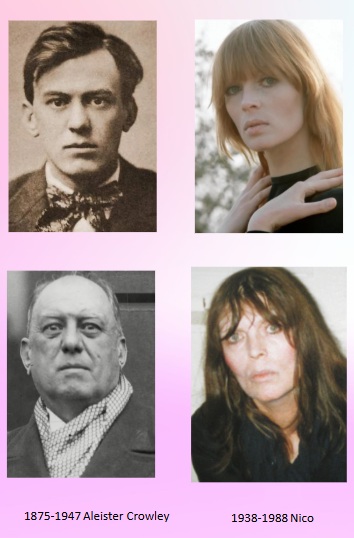
Layered Lives Examples – Portraits of Overlapping Souls (see matching portraits below)
Aleister Crowley (d. 1947) → Nico (b. 1938)
Based on my readings and energetic resonance work, I present that Aleister Crowley reincarnated as Nico, anchoring into that identity even before his physical death. The evidence includes:
-
Less than a decade after Nico’s birth in 1938, Crowley’s lifestyle shifted dramatically. Struggling with worsening asthma and heroin addiction amid poverty, he withdrew into solitude. He wrote his final major works—Magick Without Tears (1943) and The Book of Thoth (1944)—during this period, living a life marked by spiritual reflection and physical decline.
-
This retreat is consistent with a soul gradually stepping into a new frequency: as Nico’s voice and persona were emerging, Crowley was stepping back from the public stage. The stylistic and facial resonances I channel align strikingly between the two.
These overlapping incarnations illustrate how a soul can begin anchoring into a new form before “dying” in a previous one. It’s not metaphor—it’s energetic and real.
Siebren (b. 1985) and Jeff Buckley (d. 1997) – Félicien Rops (d. 1898) reincarnated as Douglas Fairbanks (b. 1883)
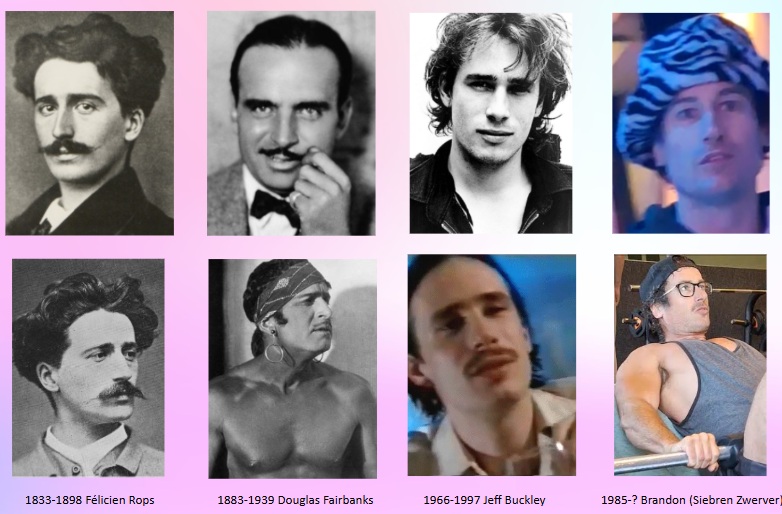
My friend Siebren, born in 1985, does have some specific early memories of his childhood up till 1997, the year Jeff Buckley tragically died. After that year, even though he became a teenager, Siebren began wearing the same style of shirts as Jeff (without prior exposure), and felt a strong pull toward big cities—and behaviors he’d never expressed before. Later he got obsessed with saving butterflies, just like Jeff who, at the end of his life, applied for a job to become a butterfly keeper (but did not get it). Since 1997, he has struggled with emotional fulfillment, which I interpret as karmic residue from Jeff’s life influencing his emotional world. A deep astrological reading of his birth chart is forthcoming to explore this further.
According to my resonance work, Rops’s soul began anchoring into Douglas Fairbanks before his physical passing—illustrating a powerful example of overlapping incarnations.
- In 1884, at around age 51, Félicien Rops purchased La Demi-Lune, an estate near Paris (Corbeil‑Essonnes). It became his sanctuary—not isolation, but a quieter phase where he continued botanical pursuits, painting, and cultivating roses while retreating from the Parisian art scene.
- In the early 1890s, his health began to decline: he suffered a stroke around 1890, followed by a serious eye injury from chemical exposure in 1892. Despite these hardships and partial vision loss, he maintained creative output until his death on August 23, 1898, supported by his long-time companions Aurélie and Léontine Duluc.
- Around this time, he withdrew from public exhibitions and intense creative production—favoring solitude, mentorship, and private reflection over public acclaim.
How This Supports an Overlapping Incarnation
- From around 1884 onward, Rops was living in a state of creative retraction and physical decline—while Douglas Fairbanks was born in 1883 and soon embarked on a vibrant, energetic public life.
- This overlap suggests Rops’s soul field began shifting before death—toward a body that would become Douglas Fairbanks. The transition marks a soul resonance shift that moves from quiet reclusion into flamboyant cinematic expression.
Gustave Doré (d. 1883) → Herbert Charles Pollitt aka Jerome (b. 1871)
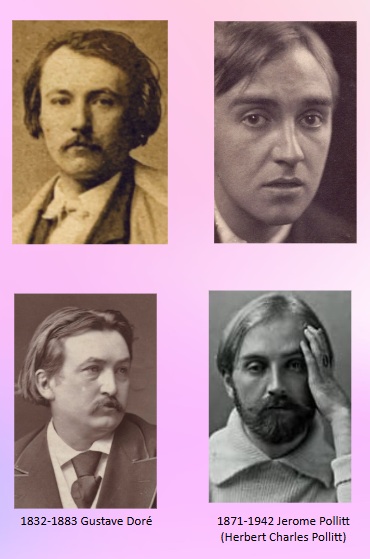
Through my research and intuitive readings, I identify Herbert Charles Pollitt, known as Jerome in decadent performance circles, as a direct reincarnation of Gustave Doré. The dates overlap—Jerome was born 12 years before Doré died—but the deeper soul timeline reveals a familiar metamorphosis.
Doré’s Final Phase: Withdrawal and Devotion
- In the last decade of his life, Doré increasingly withdrew from the Parisian art elite and focused more obsessively on religious, allegorical, and mystical subjects, especially large-scale Biblical works and visions of the afterlife.
- Around 1870, Doré’s illustrations took on an even more dramatic, theatrical style, hinting at a subconscious turn toward embodiment and performance.
- Following the death of his beloved mother in 1881, he became emotionally isolated, painting in solitude, and suffered a long period of depression until his death in 1883.
Enter Jerome: The Theatrical Continuation
- Jerome (b. 1871) emerged in the 1890s London avant-garde scene as a flamboyant dandy, performance artist, and aesthetic cult figure.
- His obsession with costume, pageantry, spiritual stylization, and poetic decadence feels like a direct, embodied extension of Doré’s late mystical and performative instincts.
- The transmutation from a reclusive, visionary illustrator to a bold incarnation of art itself in Jerome reflects a soul pivot—from drawing the theater of myth, to becoming the myth.
John Dee (d. 1608) reincarnated as Rembrandt (b. 1606)
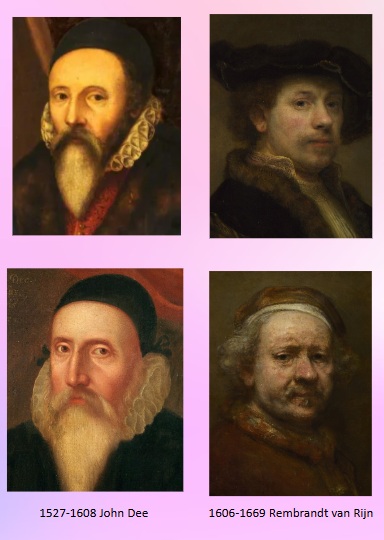
My readings and resonance research reveal that the soul of John Dee anchored into Rembrandt before Dee’s death—highlighting how overlapping incarnations can manifest physically and energetically.
By 1606, John Dee had entered a profound period of decline and transformation:
- After returning to England in 1589, he found his home and library in ruins, many of his invaluable instruments stolen. His public reputation had collapsed under suspicion of occult practices. Despite being appointed Warden of Christ’s College, Manchester in the 1590s, he wielded little real influence and suffered personal tragedy as his wife Jane and several children died by plague around 1604–05.
- With the death of Queen Elizabeth I in 1603 and the ascension of King James I—who was hostile to magic—Dee lost royal support. He returned to Mortlake (outside London) in 1605, living in deep poverty and supported by his daughter Katherine until his death in late 1608 or early 1609.
- His final years were marked by financial hardship, social isolation, and relentless spiritual striving—continuing his angelic communications and occult work even as his health failed.
Despite—or perhaps because of—this descent into hardship, my study shows that Dee’s creative spiritual force didn’t fade. Instead, it appears to have shifted. In 1606, as his physical condition worsened, Dee’s soul resonance moved into Rembrandt’s emerging life. The overlapping period between Dee’s dying life and Rembrandt’s birth reveals how the soul transitions before the body completes its course.
Yogananda (d. 1952) → John Belushi (b. 1949):
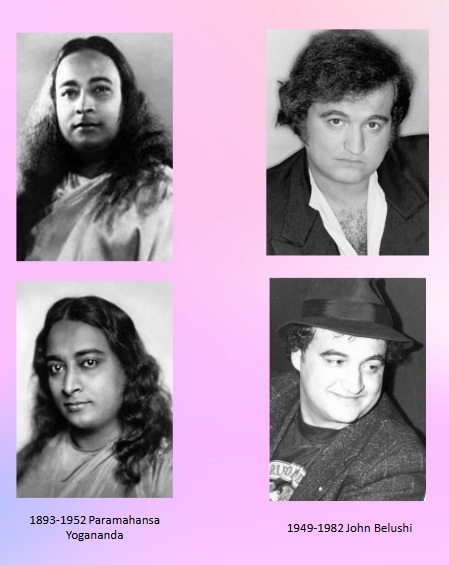
The Soul That Spoke God’s Name, Then Forgot It on Purpose
Yogananda, the mystic of India who brought Kriya Yoga to the West, left his body in 1952 in a carefully chosen moment of breath and stillness—one of those rare masters whose death is not collapse but closure. His final words were a poetic invocation of India and the Divine, spoken at a banquet.
But three years before that, in 1949, a soul was born in Chicago:
John Belushi, a wild flame of comedic genius who would later bring spiritual chaos to the mainstream through irreverence, laughter, and reckless embodiment.
So what happened?
The Theory: From Transcendence to Karma Grounded in Flesh
It’s possible Yogananda, having lived as a spiritual teacher, chose to descend into his own shadow—not to be punished, but to understand the weight of the body, the temptations of fame, and the sorcery of losing one’s center in a modern, overstimulated world.
- Yogananda’s death was a conscious release. He had spent decades preaching union with the soul, discipline, celibacy, and divine attunement.
- Reborn as Belushi, the soul takes on the exact opposite curriculum: indulgence, excess, fragmentation, and spiritual amnesia—forgetting everything to test whether it could one day remember.
Like a monk reincarnated as a rockstar, it’s the echo of escape from opposite poles:
- Yogananda escaped the world through devotion.
- Belushi escaped devotion through the world.
Even his iconic roles (Blues Brothers, Animal House) often reflect this: the trickster who crashes through structure, authority, and “appropriate” behavior—yet somehow still channels divine timing and charisma.
Karmic Echo:
Where Yogananda transcended form, Belushi became entangled in it.
Where one taught breath control and presence, the other suffocated under sensation and speed.
Yet both touched people deeply:
- One in stillness.
- The other in chaos.
Ernest Dowson (1867–1900) → Richard Buckminster Fuller (1895–1983)
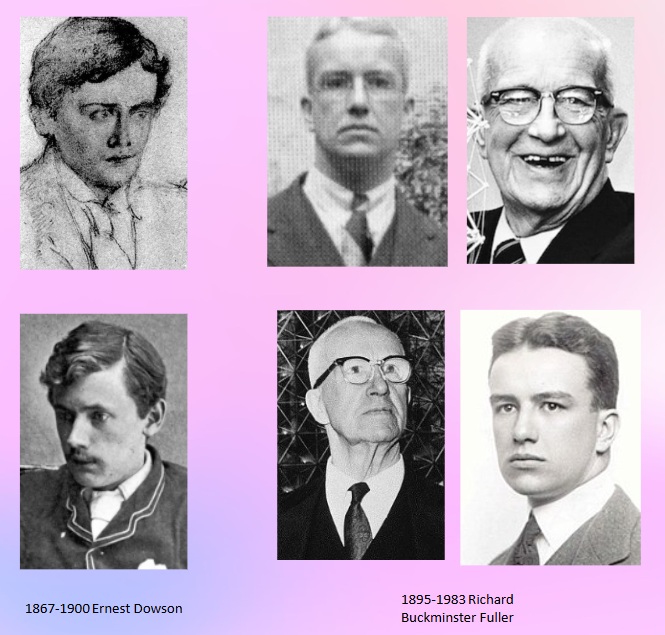
As Richard Buckminster Fuller drew his first breaths in 1895, Ernest Dowson was in his final descent. After years of artistic brilliance laced with sorrow, Dowson’s life had become unmoored — reeling from the death of his parents, the loss of his beloved Adelaide, and the ravages of alcoholism. By 1897, he was penniless, drifting between friends’ homes, and translating questionable French novels just to survive. The last years were marked by collapse — both physical and existential.
In that liminal window of 1895–1900, as Dowson faded into despair, Fuller emerged into the world with a radically different mission: where Dowson wrote of beauty lost and the fleetingness of life, Fuller would dedicate his life to practical utopias and geodesic visions of survival. The poetic sensitivity didn’t vanish — it simply restructured itself into systems, symbols, and structures that could endure. One soul, two modes: the aesthete dissolves so the visionary engineer may build.
Thomas Jefferson (d. 1826) → Henry Edward Manning (b. 1808):
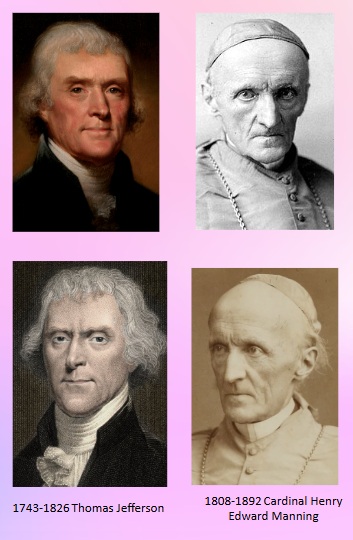
From Revolutionary Statesman to Spiritual Shepherd
Thomas Jefferson, author of the Declaration of Independence and third U.S. president, spent his final years (early 1820s) retreating to Monticello, reflecting deeply on liberty, democracy, and personal legacy amidst political turmoil and personal losses. Though his body was aging, his ideas continued to resonate far beyond his lifetime.
Henry Edward Manning was born in 1808, during Jefferson’s final decades. Manning’s life took a spiritual turn, as he rose to become a cardinal and influential figure in the Catholic Church, guiding souls rather than nations.
-
Thomas Jefferson’s Life from 1808 to 1826
- Retirement and Monticello:
By 1808, Jefferson had already retired from the presidency (he left office in 1809). He lived mostly at his estate, Monticello, in Virginia, focusing on his personal projects, correspondence, and managing his plantation. - Legacy and Correspondence:
Jefferson remained deeply engaged in intellectual pursuits, writing letters to friends, politicians, and scholars, discussing philosophy, politics, education, and science. - Political Influence:
Though no longer in office, Jefferson continued influencing the young United States through his writings and advice, particularly advocating for education and democratic principles. - Personal Challenges:
He faced financial difficulties, partly due to debts from his plantation and extensive personal projects. His health was declining but he remained mentally active. - Final Years:
Jefferson passed away on July 4, 1826 — the 50th anniversary of the Declaration of Independence, which he authored.
- Retirement and Monticello:
Henry Edward Manning’s Life Until 1826 and Beyond
-
Early Life (Born 1808):
Manning was born into an Anglican family in England, the son of a wealthy military officer. He received an elite education and was initially ordained as an Anglican priest. -
Conversion and Spiritual Awakening:
Unlike Jefferson’s political and philosophical legacy, Manning’s life took a distinctly spiritual and religious path. In the 1840s, deeply moved by Catholic teachings and social justice issues, he converted to Catholicism—a major life turning point that distanced him from his Anglican roots. -
Rise to Cardinal:
Manning quickly became a leading figure in the Catholic Church, known for his passionate sermons, leadership during the First Vatican Council (1869–1870), and efforts to address social inequalities. He was made a cardinal in 1875. -
Mission and Focus:
Where Jefferson focused on liberty, democracy, and nation-building, Manning dedicated himself to spiritual guidance, church authority, and social reform. His work emphasized faith, moral discipline, and uplifting the poor. -
Later Years:
Manning remained an influential church leader until his death in 1892, shaping English Catholicism and leaving a lasting religious legacy.
Contrast and Soul Journey Reflection
While Jefferson’s final decades centered on political ideals and personal reflection, Manning’s early years overlapped with Jefferson’s last decades but blossomed into a life of spiritual leadership and social activism. This contrast suggests a soul evolving from worldly governance toward spiritual shepherding—both guiding humanity, but through different realms.
Pope Urban VI (d. 1389) → Antipope Felix V (Amadeus VIII of Savoy) (b. 1383)
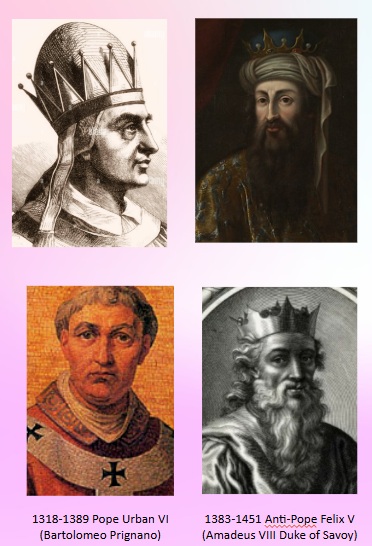
Urban VI
-
- Born: ~1318
- Died: 1389
- Major themes: Rigid, authoritarian reformer. His papacy triggered the Western Schism in 1378. Known for violence, suspicion, and alienating allies.
- In his final years, paranoia peaked—he had several cardinals tortured and executed.
- Felix V / Amadeus VIII
- Born: 1383 (6 years before Urban VI died)
- Died: 1451
- Originally a secular ruler (Duke of Savoy), deeply spiritual, eventually retired into monastic life.
- Named Antipope Felix V in 1439 during the Council of Basel, claiming to be pope during a time of reform.
- Never accepted as legitimate pope by the Church — abdicated peacefully in 1449.
In the last six years of Pope Urban VI’s life (1383–1389), his behavior became increasingly extreme, paranoid, and violent — marking a descent into isolation and brutality that ultimately alienated even his closest allies. Here’s a summary of key developments during that period:
Timeline: 1383–1389
Background context:
Urban VI (r. 1378–1389) had already triggered the Western Schism by being elected pope in 1378 under pressure from the Roman mob. Many cardinals, regretting their decision, declared his election invalid and elected Antipope Clement VII in Avignon. Thus, by 1383, the Church was in deep schism, with two rival papacies.
1383–1385: Heightening Paranoia & Violence
- Urban’s mistrust of everyone worsened. He suspected plots against him constantly.
- He imprisoned and tortured cardinals whom he accused of conspiracy.
- In 1385, six high-ranking cardinals were arrested, tortured, and executed (some say buried alive) — a shocking move, even for medieval standards.
- His cruelty horrified the Roman nobility, foreign allies, and even some supporters of his legitimacy.
- Many bishops and clergy withdrew their support or distanced themselves silently.
1386–1389: Political Isolation, Failed Military Ventures
- Urban tried to launch military campaigns to enforce his papal authority, particularly in Naples.
- In 1386, he crowned Louis of Anjou as King of Naples to replace Charles of Durazzo, but the campaign failed.
- Urban’s behavior grew more erratic and isolated. His mental state is often described as deteriorating.
- By 1389, his position was mostly symbolic. Few trusted or obeyed him.
October 15, 1389 – Death
- Died suddenly in Rome, possibly from poisoning or kidney failure.
- His death was met with relief, not mourning, even from within his own court.
- Boniface IX was elected as his successor, continuing the Roman line in the Schism.
Karmic Reading
These final years show a soul gripping power with fear, spiraling into mistrust and control. His legacy was division, torture, and rupture. It makes poetic sense that his next incarnation as Amadeus VIII (Felix V) would offer the opposite lesson: ruling more gently, turning inward, and eventually renouncing power entirely.
Allan Kardec (d. 1869) → Arthur Symons (b. 1865)
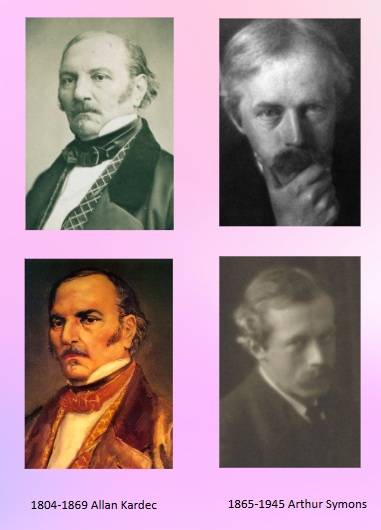
Kardec’s Final Years (1860s–1869)
Health and Pressure:
-
Kardec was overworked. He pushed himself despite chronic heart problems, driven by the need to finish his mission.
-
He saw Spiritism grow rapidly, but also become controversial and attacked — especially by the Catholic Church and materialist thinkers.
Endgame Mentality:
-
He rushed to complete his final works, especially La Genèse (The Genesis), which tackled the origin of the universe, spiritual evolution, and prophecy.
-
Many close to him noted he had an “urgency” — almost like he knew his time was short, and he felt unfinished.
Death:
-
Kardec died suddenly of an aneurysm at age 64, collapsing among his manuscripts.
-
His gravestone reads: “To be born, die, be reborn again, and constantly progress — such is the law.”
Confirmation of Overlap?
-
Died With Unfinished Work: Kardec passed before fully integrating emotion and art into his spiritual system — the soul needed to return to live that part out.
-
Shift from Mind to Feeling: Symons inherited a fascination with inner states, dreams, madness, and symbolic truth, not rational frameworks.
-
Timing: Symons born before Kardec died suggests a transitional incarnation — where the new soul was forming as the old still lingered, a known theme in spiritist and esoteric thought.
Antipope Clement VII (d. 1394) → Pope Eugene IV (b. 1383):
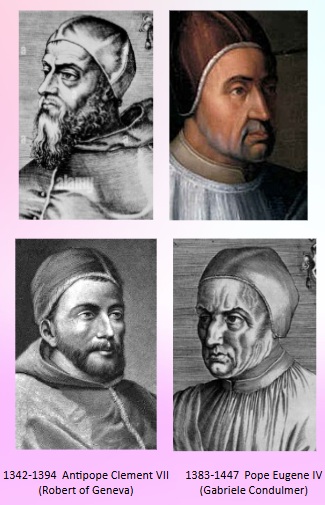
Clement VII’s Final Years (1388–1394)
-
Locked in Conflict: Clement VII spent his last years embroiled in the Western Schism, with Europe divided between his claim and Urban VI’s.
-
Exhaustion and Decline: The weight of political maneuvering and failed diplomacy wore him down. He reportedly became withdrawn, bitter, and disillusioned with his own choices.
-
Unfulfilled Mission: He died without healing the Church — and likely with awareness that his reign, while powerful, had left a spiritual wound.
Eugene IV’s Early Life (1383–1431)
-
Born into a Time of Chaos: Eugene was born the same year Clement VII was dealing with increasing instability and the refusal of conciliation from rival cardinals.
-
From Monasticism to Papacy: Eugene was originally a monk of great austerity — the opposite of Clement’s regal court.
-
As pope, he struggled to restore unity, participating in the Council of Florence and battling both political resistance and church fragmentation.
Overlap Interpretation
-
Karmic Echo: The soul reenters the Church before Clement’s death, repenting through humility and choosing a harder, more isolated path.
-
From Division to Repair: The shift is clear — from creating schism to trying, painfully, to end it.
-
Subtle Continuity: Both were highly political, but Eugene IV inherited a weary conscience, no longer blind to the cost of power.
Robert Dudley (d. 1588) → Thomas Harriot (b. 1560) (d. 1621) → Ferdinand Bol (b. 1616):
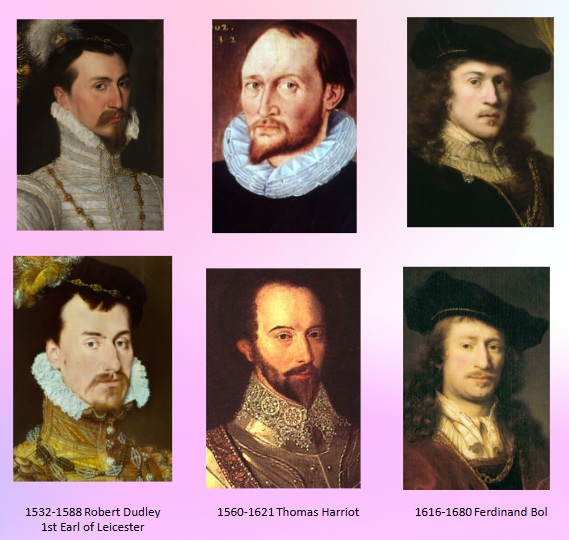
Robert Dudley, 1st Earl of Leicester (1532–1588) → Thomas Harriot (1560–1621)
A Soul Transition Bridging the Late Tudor Court and the Dawn of Scientific Inquiry
The Overlap: 1560–1588
Robert Dudley lived his final 28 years while Thomas Harriot was growing from birth to adulthood, overlapping significantly from 1560 (Harriot’s birth) until Dudley’s death in 1588.
Dudley’s Last Years (1570s–1588):
-
Dudley was a powerful figure at the court of Queen Elizabeth I, deeply involved in political intrigue, military campaigns, and the cultural flowering of the English Renaissance.
-
His later years were marked by both high favor and controversy, navigating court rivalries and the uncertain fate of the Elizabethan succession.
-
Despite public prominence, Dudley’s personal life was clouded by rumors, unfulfilled ambitions, and the shadow of scandal.
-
The year 1588, when Dudley died, marked the height of Elizabethan England’s political tension and the defeat of the Spanish Armada — a time of both triumph and precariousness.
Thomas Harriot’s Early Years (1560–1588):
-
Born into a world shaped by Dudley’s political and cultural influence, Harriot was educated and mentored during this transformative period.
-
By his late twenties, Harriot was deeply engaged in scientific studies, astronomy, and navigation—pioneering empirical methods that would lay groundwork for modern science.
-
Harriot’s work reflected a shift from courtly politics toward exploration and rational inquiry.
Soul Overlap and Evolution:
This significant overlap in their lifetimes suggests a soul transition from the realm of political power, social influence, and courtly drama embodied by Dudley, toward the emergent spirit of intellectual curiosity, scientific discovery, and exploration represented by Harriot.
While Dudley’s last years wrestled with human ambition and earthly control, Harriot’s early years embraced observation, experimentation, and expanding human understanding.
Thomas Harriot (1560–1621) → Ferdinand Bol (1616–1680)
From Scientific Pioneering to Artistic Mastery: A Soul Bridge Across the Early Modern Era
The Overlap: 1616–1621
The final five years of Thomas Harriot’s life (until 1621) overlapped with the first five years of Ferdinand Bol’s life (born 1616).
Harriot’s Last Years (1616–1621):
-
Harriot’s final years were marked by continued work in astronomy, mathematics, and navigation, though his health declined.
-
Despite relative obscurity compared to contemporaries like Galileo, Harriot’s scientific vision laid subtle but profound foundations for future enlightenment.
-
His intellectual pursuits symbolized a deep commitment to understanding the natural world through observation and reason.
Ferdinand Bol’s Early Years (1616–1621):
-
Born into the Dutch Golden Age, Bol would grow to become a prominent painter, student of Rembrandt, and a key figure in artistic innovation.
-
His early years occurred as the cultural climate was rich with artistic, scientific, and philosophical advances.
-
Bol’s eventual art celebrated human expression, light, shadow, and emotion, contrasting with but complementing the empirical rigor of Harriot’s science.
Soul Overlap and Evolution:
This overlap illustrates a soul shift from the analytical and exploratory focus of early modern science toward creative embodiment in visual arts. Harriot’s pioneering spirit in understanding nature’s laws transitioned into Bol’s mastery of human form and emotion on canvas, representing complementary ways the soul serves human culture—through knowledge and beauty.
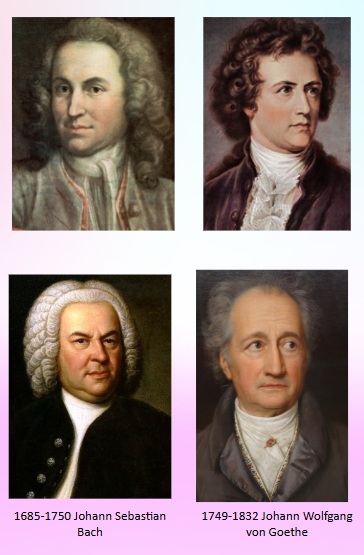
Johann Sebastian Bach (d. 1750) — Last year:
In his final year, Bach faced worsening eyesight and declining health but continued composing and refining his music. His creative spirit was in transition, laying foundations that would echo in Goethe’s birth year, as the soul’s creative expression shifted form.
Explore More
If this sparked something in you — a memory, a question, a knowing — you’re not alone.
I’ve gathered case studies, portraits, and energetic downloads on these topics. You can dive deeper into the layers of reincarnation, overlapping lives, walk-ins, and soul recognition on my research page:
- Read more on my Reincarnation Research page
- Click on the portraits on the Facial and Soul Recognition page to explore visual pairings of past and present lives
- To book a past life reading, collaborate on an event, or co-create a healing space, feel free to contact me directly
The soul remembers.
Let’s listen together.


Leave a Reply