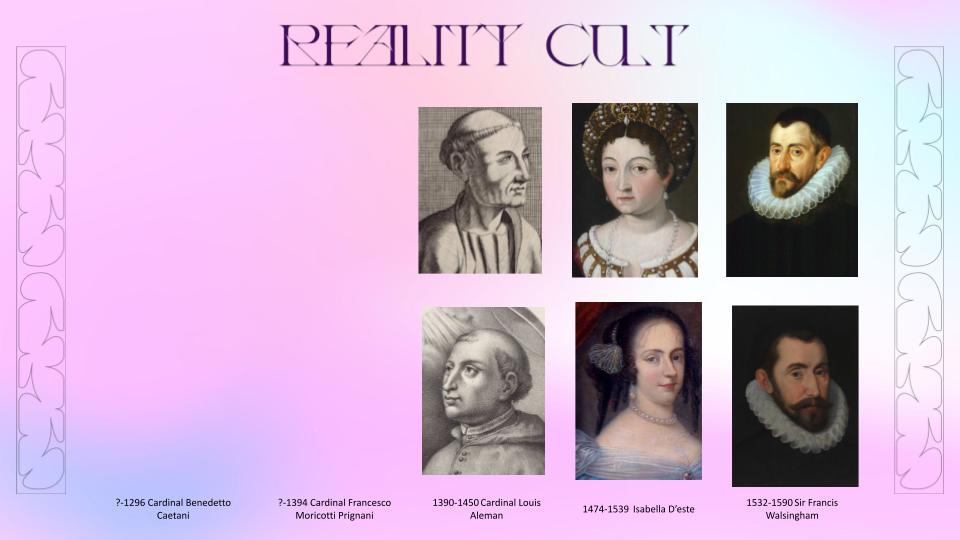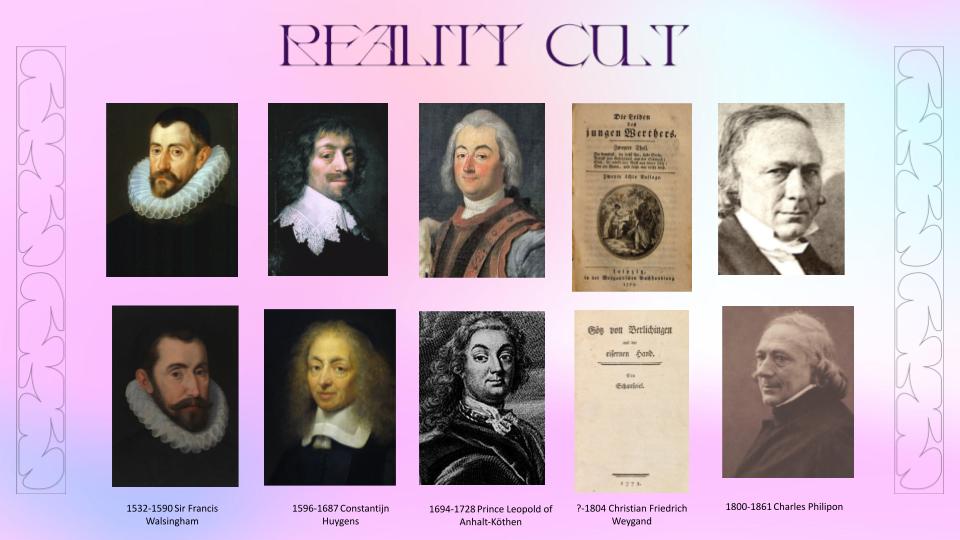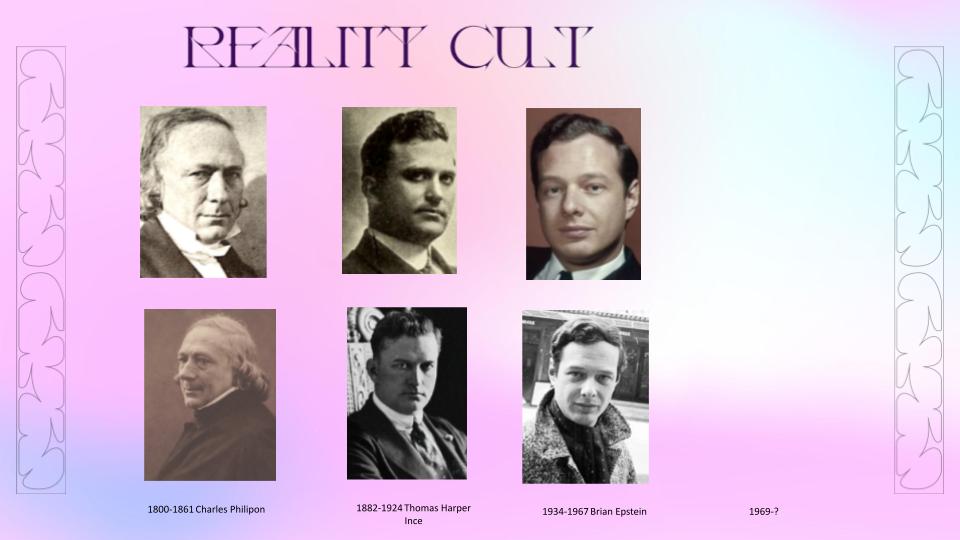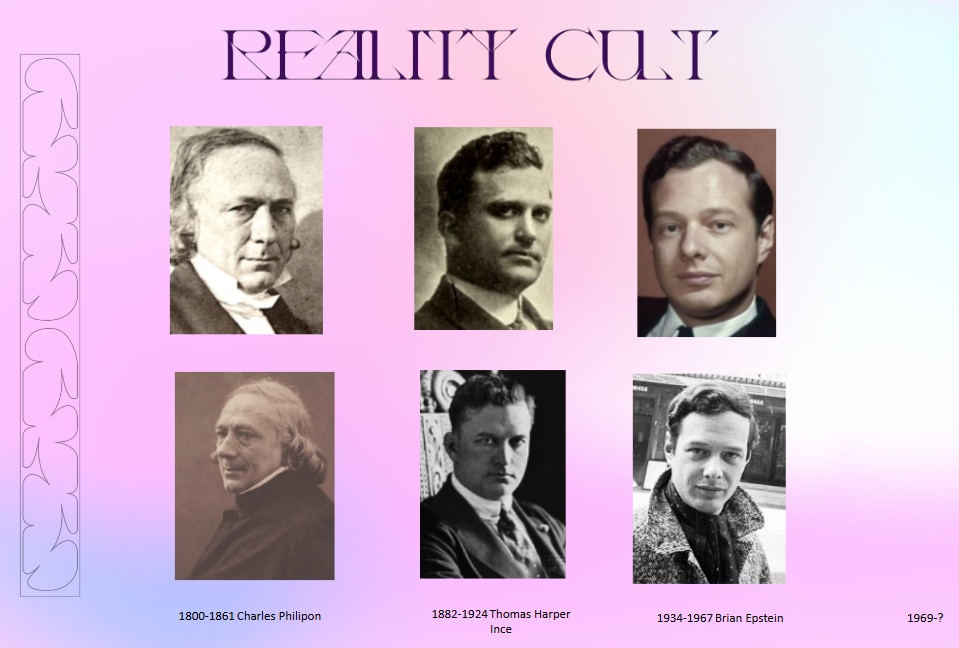
CARDINAL LOUIS ALEMAN -> ISABELLA D’ESTE
Isabella d’Este’s chart carries extraordinarily strong signatures of cultural influence, political intelligence, artistic patronage, spiritual continuity, and karmic responsibility connected to institutions of power, intellectual preservation, and collective refinement. The chart is remarkably dense with interlocking grand trines, kites, oppositions, and tension configurations, suggesting a soul operating at the intersection of diplomacy, aesthetics, governance, ideology, and long-term cultural shaping. When viewed through the lens of Cardinal Louis Aleman as the preceding incarnation, the continuity becomes especially striking, revealing an evolutionary movement from ecclesiastical power and institutional mediation into artistic patronage, cultural diplomacy, and the shaping of Renaissance humanism.
One of the most dominant signatures in the chart is the enormous concentration of Capricorn, Scorpio, Cancer, Pisces, and Gemini energy woven together through multiple grand trines and kite formations. These patterns suggest a soul with highly developed strategic intelligence and long karmic familiarity with systems of influence, governance, preservation, mediation, and collective organization. Souls with strong kite configurations often carry unusually integrated capacities developed across many incarnations, where talents accumulated over time begin operating together as part of a larger evolutionary mission.
The Capricorn Ascendant conjunct Jupiter immediately establishes the archetype of authority, legacy-building, discipline, reputation, and long-term influence. Capricorn rising frequently appears in souls with karmic histories tied to institutions, hierarchy, governance, or systems carrying historical continuity across generations. Conjunct Jupiter, this becomes amplified into cultural authority, expansion through leadership, and the ability to accumulate influence, prestige, and social power over time.
This placement strongly echoes the previous incarnation as Cardinal Louis Aleman. Aleman operated within ecclesiastical structures during periods of political and religious instability, serving as mediator, diplomat, and negotiator within powerful institutional frameworks. The Capricorn-Jupiter emphasis suggests a soul deeply familiar with navigating hierarchical systems and wielding influence strategically within established structures. However, while Aleman’s life focused more heavily on church authority and institutional politics, Isabella’s incarnation appears to redirect those same capacities into the realm of art, culture, intellectual patronage, and courtly refinement.
The North Node conjunct Midheaven in Scorpio in the 10th house is one of the clearest karmic signatures in the chart. Scorpio in the 10th suggests a soul path deeply tied to power, transformation, influence, legacy, secrecy, and the management of collective perception. The 10th house governs public legacy, societal role, authority, and long-term historical impact. With the North Node here, the soul appears strongly pushed toward visible influence and transformative cultural positioning within society itself.
Scorpio adds psychological depth, strategic awareness, and the ability to navigate hidden dynamics beneath public systems. This placement frequently appears in individuals whose societal influence extends beyond surface reputation into deeper structural or symbolic transformation. Isabella’s role as patron, collector, political mediator, and curator of Renaissance culture fits this symbolism remarkably well. She did not merely participate in culture; she actively shaped intellectual and artistic history through networks of influence, taste, diplomacy, and preservation.
The conjunction with Uranus intensifies the innovative and future-oriented dimensions of this path. Uranus in Scorpio often appears in souls involved in transformative shifts within power systems, collective values, or hidden knowledge structures. In Isabella’s case, this suggests that her role was not simply conservative patronage but helping facilitate cultural transition itself. The Renaissance represented a major civilizational shift involving art, philosophy, science, classical revival, and changing structures of human identity. Uranus here suggests the soul was actively participating in the acceleration of those transformations.
When viewed through Cardinal Louis Aleman, this becomes especially coherent. Aleman’s life revolved around maintaining and negotiating institutional continuity during periods of fragmentation within the church and political order. In Isabella’s incarnation, the same strategic and diplomatic capacities evolve toward shaping emerging cultural paradigms rather than stabilizing religious authority structures alone. The soul appears to move from preserving institutional power into cultivating intellectual and artistic civilization itself.
The enormous grand trine involving Scorpio, Pisces, and Cancer placements deepens this significantly. Water grand trines often indicate accumulated emotional, intuitive, and psychological intelligence developed across multiple incarnations. There is frequently a natural ability to navigate collective emotional currents, symbolic systems, and hidden interpersonal dynamics almost instinctively.
The Pisces Vesta and Aquarius Chiron placements within these patterns suggest a soul carrying deep devotion toward intellectual, spiritual, and cultural preservation. Vesta in Pisces often reflects sacred dedication toward transcendent ideals, artistic refinement, mystical continuity, or spiritualized forms of service. In Isabella’s life this manifested through extraordinary devotion to collecting, preserving, commissioning, and cultivating artistic and intellectual culture.
This appears as an evolutionary continuation of previous incarnations connected to church structures and intellectual mediation. Through Cardinal Louis Aleman and likely the earlier ecclesiastical incarnations as well, the soul appears deeply embedded within systems responsible for preserving doctrine, knowledge, continuity, and institutional order. In Isabella’s incarnation, this same archetypal function becomes secularized and artistically transformed through Renaissance patronage and cultural curation.
The Cancer Mercury-Saturn conjunction opposing the Capricorn Ascendant and Jupiter adds another major karmic theme surrounding emotional responsibility, diplomacy, communication, and relational burden. Mercury conjunct Saturn frequently appears in souls carrying serious intellectual responsibilities across lifetimes. There is disciplined thought, strategic communication, memory, caution, and often an awareness that language, negotiation, and perception carry immense consequences.
In Cancer, these themes become emotionally infused. The soul appears highly sensitive to relational dynamics, alliances, emotional security, and social cohesion. This fits strongly with Isabella’s role within elite political and familial networks where diplomacy, correspondence, alliance-building, and emotional intelligence became central to maintaining influence and stability.
The opposition to Capricorn suggests a recurring karmic tension between personal emotional needs and public duty. Souls with strong Capricorn-Cancer axes often repeatedly incarnate into positions where private emotional life becomes subordinated to responsibility, governance, or historical obligation. This appears highly consistent across both Isabella and Cardinal Louis Aleman, where institutional or societal responsibilities overshadowed purely personal desires.
The Gemini Sun and Venus in the 5th house introduce another important evolutionary shift. Gemini governs intellectual curiosity, communication, networking, exchange of ideas, cultural circulation, and multidimensional thinking. In the 5th house, this becomes tied to creativity, artistic expression, refinement, and cultural production. Isabella’s incarnation appears to represent a major expansion into artistic and intellectual embodiment after previous lives more heavily centered around institutional authority.
Venus in Gemini especially reinforces patronage, aesthetic intelligence, social charisma, and fascination with intellectual and artistic exchange. Yet the Venus-Mars-Chiron tensions suggest that creativity and relational dynamics were not entirely harmonious. The T-square involving Venus, Mars, Vesta, and Chiron points toward recurring conflicts between personal desire, devotion, public role, and emotional vulnerability.
Mars in Leo in the 8th house intensifies themes of pride, power, sexuality, legacy, and psychological intensity. The 8th house frequently appears strongly in charts connected to hidden influence, inheritance, political alliances, resource exchange, and transformation through crisis or intimacy. Mars here suggests a soul highly aware of power dynamics operating beneath social appearances.
The repeated Leo placements involving Juno, Pallas, Lilith, and Mars also suggest karmic lessons surrounding visibility, creative authority, pride, recognition, and relational negotiation. Isabella’s life involved navigating male-dominated power structures while simultaneously asserting intellectual and artistic authority within them. The Leo energy suggests a soul learning how to wield visibility and creative influence directly rather than purely through institutional position.
The Neptune-Part of Fortune conjunction in Scorpio in the 10th house adds another extraordinary dimension. Neptune here suggests mythic projection, artistic idealization, symbolic influence, and the ability to shape collective imagination itself. Conjunct the Part of Fortune, it indicates that part of the soul’s fulfillment and historical impact emerged precisely through symbolic, artistic, and cultural influence rather than conventional political authority alone.
This placement strongly reinforces Isabella’s historical role as a mythic cultural figure whose influence extended beyond governance into the shaping of Renaissance aesthetics, symbolism, taste, and collective artistic memory.
Overall, Isabella d’Este’s chart suggests a soul moving through a profound evolutionary transition. Through previous incarnations connected to ecclesiastical authority, diplomacy, institutional continuity, and intellectual mediation, the soul accumulated immense strategic, political, and organizational intelligence. In Isabella’s incarnation, these capacities evolve into artistic patronage, cultural shaping, intellectual refinement, and direct participation in the rebirth of European humanism and Renaissance culture.
The chart reflects a consciousness repeatedly positioned near systems responsible for preserving and transmitting civilization itself — whether through religion, diplomacy, governance, philosophy, or art. Across incarnations the recurring karmic thread involves mediation between power and culture, preservation and innovation, structure and beauty, institutional continuity and emerging collective transformation.
ISABELLA D’ESTE -> SIR FRANCIS WALSINGHAM
Because Sir Francis Walsingham’s exact birth date is unknown and even the year itself is listed only as “around 1532,” the chart cannot be interpreted with the same precision as the later incarnations in the lineage. Personal planets such as the Sun, Moon, Mercury, Venus, and Mars move too quickly to reliably analyze without a confirmed birth date, and even the Nodes may not be fully dependable unless they remained in the same sign throughout the broader period. The safest approach is therefore to focus primarily on the slower-moving planetary climate surrounding the incarnation itself and to interpret the chart symbolically rather than literally. (Wikipedia)
Even with those limitations, however, the broader astrological atmosphere surrounding Walsingham’s incarnation aligns remarkably well with both his historical role and the evolutionary trajectory emerging from Isabella d’Este’s chart. The transition from Isabella into Walsingham reflects a major shift in how influence, intelligence, and cultural power are expressed. In Isabella’s incarnation, the soul worked primarily through artistic patronage, diplomacy, cultural refinement, and intellectual curation within Renaissance courts. In Walsingham’s life, those same capacities appear to evolve into strategic intelligence, political surveillance, statecraft, ideological protection, and the management of information itself.
The continuity between the two lives becomes especially visible through the recurring themes of mediation, network-building, institutional navigation, and influence operating behind visible structures of power. Isabella d’Este shaped Renaissance culture through artistic and intellectual patronage, while Walsingham helped shape the political future of Elizabethan England through diplomacy, espionage, information networks, and strategic coordination. In both incarnations the soul appears positioned near the center of emerging historical transformations while functioning less as a visible ruler and more as a curator, strategist, organizer, and facilitator operating behind larger systems.
The broader planetary climate of the early 1530s strongly reflects this transitional archetype. Europe during this period was undergoing enormous ideological fragmentation through the Reformation, religious conflict, political instability, and the rapid expansion of new systems of communication, diplomacy, and state power. Walsingham’s eventual role as Elizabeth I’s principal secretary and intelligence architect placed him directly within this atmosphere of ideological warfare, hidden networks, coded communication, and geopolitical transformation. (Encyclopedia Britannica)
Symbolically, the lineage appears to move here from Renaissance preservation and artistic cultivation into information control, political intelligence, and strategic management of collective narratives. The soul that previously cultivated culture now becomes increasingly involved in protecting systems of power and navigating hidden political dynamics beneath the visible surface of society.
This evolutionary shift also reflects a movement away from the softer Venusian and courtly dimensions visible in Isabella’s incarnation toward stronger Saturnian, Plutonic, and Mercurial themes: secrecy, surveillance, ideological conflict, coded communication, psychological strategy, and long-term institutional preservation. Walsingham became legendary precisely for building sophisticated intelligence systems involving spies, intercepted correspondence, cryptography, and covert diplomacy. (Encyclopedia Britannica)
Thematically, this suggests the soul continuing to develop mastery over systems of mediation and influence, but now operating within far more dangerous and psychologically intense environments. Rather than shaping collective culture through art and patronage, the soul becomes embedded within hidden political structures where information itself functions as power.
There also appears to be a continuation of the lineage’s recurring relationship with periods of civilizational transition. Isabella’s life unfolded during the rise of Renaissance humanism and artistic rebirth; Walsingham’s unfolded during the fragmentation of religious authority, the emergence of Protestant England, and the formation of modern intelligence structures. Across both incarnations the soul repeatedly appears during moments when old systems are destabilizing and new societal frameworks are emerging.
Another recurring thread involves proximity to powerful institutions without fully embodying sovereign authority itself. Isabella wielded enormous influence through patronage and diplomacy while operating within broader dynastic systems. Walsingham similarly became one of the most influential figures in Elizabethan England while serving the Crown rather than ruling directly. This repeated archetype of the “hidden architect” or strategic intermediary continues strongly through the lineage.
The transition from Isabella into Walsingham may also reflect a growing psychological hardening within the soul’s evolutionary journey. Isabella’s chart still carried strong artistic, Venusian, and culturally generative dimensions. Walsingham’s life, by contrast, became defined by suspicion, secrecy, ideological threat, espionage, surveillance, and existential political tension. The soul appears increasingly drawn into environments where intelligence, perception, and hidden information determine collective survival itself.
At the same time, the intellectual and diplomatic capacities developed through earlier incarnations remain clearly visible. Walsingham was highly educated, internationally connected, deeply involved in European diplomacy, and skilled in navigating complex ideological landscapes. (Wikipedia) These qualities feel like direct continuations of the intellectual mediation, strategic refinement, and institutional fluency already cultivated through Isabella d’Este and the earlier ecclesiastical incarnations preceding her.
Overall, even without a reliable natal chart, the symbolic and historical continuity within the lineage remains striking. The evolutionary movement appears to progress from ecclesiastical diplomacy and institutional continuity into Renaissance patronage and cultural shaping, and then further into intelligence systems, political strategy, hidden networks, and the management of information during periods of ideological upheaval.
Across these incarnations, a consistent karmic thread emerges around mediation between power and knowledge, preservation of societal structures during transitional eras, and influence exercised through networks, communication, strategy, and systems operating behind visible authority.
SIR FRANCIS WALSINGHAM -> CONSTANTIJN HUYGENS
Constantijn Huygens’ chart carries exceptionally strong signatures of intellectual refinement, diplomacy, artistic cultivation, strategic communication, and the synthesis of culture, politics, science, and philosophy into a coherent social vision. The chart reflects a soul that has already accumulated extensive experience operating within systems of influence, mediation, and institutional proximity, yet now begins integrating those capacities into increasingly multidimensional forms of expression. When viewed through the lens of Sir Francis Walsingham as the preceding incarnation, the continuity becomes highly coherent, revealing an evolutionary movement away from secrecy, surveillance, and political intelligence toward intellectual elegance, artistic embodiment, humanistic refinement, and cultural synthesis.
One of the most striking signatures in the chart is the enormous emphasis on Air signs, especially Aquarius, Libra, and Gemini, combined with highly active Virgo and Aries placements. This creates a soul pattern centered around intellectual networks, communication systems, diplomacy, multidisciplinarity, social influence, and collective contribution through knowledge and culture. Unlike the more psychologically intense and politically covert atmosphere surrounding Walsingham’s incarnation, Huygens’ chart reflects a major softening and refinement of the lineage’s expression. The same strategic intelligence remains present, but it now channels itself more visibly through art, literature, music, philosophy, science, correspondence, and intellectual exchange.
The North Node in Aries in the 11th house immediately establishes a major karmic theme around leadership within intellectual or collective environments. The 11th house governs networks, cultural movements, intellectual communities, collective ideals, and societal evolution. Aries here suggests a soul learning how to assert independent vision within larger systems of influence rather than functioning purely as an intermediary or servant to power structures.
This becomes especially significant when viewed beside Walsingham’s life. Walsingham operated heavily through hidden intelligence systems, diplomacy, secrecy, coded communication, and political protection of institutional order. In Huygens’ incarnation, those same abilities evolve into visible participation within intellectual and artistic circles rather than covert statecraft alone. The soul appears to retain its mastery of networks, correspondence, mediation, and strategic perception, but now seeks greater creative and philosophical self-expression within them.
The sextile between the North Node and Pallas in Aquarius deepens this enormously. Pallas governs strategy, pattern recognition, intellectual synthesis, and political intelligence. In Aquarius, it suggests an unusually advanced capacity for understanding collective systems, abstract structures, innovation, and long-term societal evolution. The connection to the North Node implies that strategic intelligence itself became central to the soul’s evolutionary development.
This placement strongly reflects Huygens’ historical role as diplomat, poet, composer, intellectual, and advisor deeply connected to scientific and artistic circles of the Dutch Golden Age. The soul appears increasingly capable of synthesizing multiple domains of knowledge into a unified worldview — something already hinted at through Isabella d’Este’s Renaissance patronage and Walsingham’s political intelligence networks, but now becoming much more consciously integrated.
The Aquarius Moon conjunct the Midheaven is one of the clearest indicators of public intellectual and cultural influence. The Moon in Aquarius often belongs to souls psychologically oriented toward collective consciousness, innovation, social systems, and future-oriented thought. Conjunct the Midheaven, this becomes publicly visible and historically impactful. There is often a feeling of emotional identification with collective progress or intellectual advancement itself.
At the same time, the Moon’s opposition to Mercury and Neptune in Leo creates a major tension between rational detachment and emotional imagination, between public intellectual identity and private emotional or artistic longing. Neptune in Leo introduces theatricality, idealization, symbolic creativity, artistic vision, and mythic imagination. The opposition suggests a soul attempting to reconcile objective intellectual contribution with subjective emotional and artistic expression.
This dynamic feels particularly important in the evolutionary movement from Walsingham into Huygens. Walsingham’s life was heavily Saturnian and Plutonic: surveillance, ideological conflict, secrecy, institutional preservation, and political danger. Huygens’ chart reflects the beginning of a reintegration of Venusian and Neptunian dimensions that were more visible earlier through Isabella d’Este. The soul appears to move away from survival-oriented intelligence work and back toward cultural refinement, beauty, philosophy, aesthetics, and intellectual artistry.
The grand trine involving the Moon-Midheaven in Aquarius, Venus in Libra, and the Gemini Ascendant further reinforces this refinement process. Air grand trines often indicate highly developed intellectual capacities accumulated over multiple incarnations. Communication, diplomacy, artistic sensitivity, social intelligence, and multidimensional thinking appear almost instinctive within the chart.
Venus in Libra in the 5th house is especially significant. Venus here suggests extraordinary aesthetic intelligence, refinement, artistic cultivation, social grace, and sensitivity to harmony and balance. In the 5th house, this becomes deeply tied to creativity, artistic expression, literature, performance, music, and cultural production. Huygens’ role as poet, composer, writer, and intellectual fits this symbolism remarkably well.
The opposition between Venus and Pluto-Uranus in Aries, however, introduces deeper tension beneath this refinement. Pluto-Uranus combinations often indicate souls involved in periods of rapid societal transformation, intellectual upheaval, or collective reorganization. In Aries, these energies become pioneering, disruptive, and highly individuated. The opposition to Venus suggests recurring tension between harmony and disruption, refinement and revolution, diplomacy and radical transformation.
This evolutionary conflict already appears throughout the lineage. Isabella mediated Renaissance transformation through culture and patronage. Walsingham navigated ideological warfare and state intelligence during the Reformation era. Huygens now enters a period where scientific revolution, philosophy, artistic culture, and political modernity increasingly intersect. The soul repeatedly incarnates near moments where collective systems of knowledge and perception are changing fundamentally.
The Virgo stellium involving the Sun, Saturn, Vesta, Mars, and Juno introduces another major layer connected to discipline, refinement, mastery, analysis, and service through craft. Virgo placements often appear strongly in souls deeply dedicated to improving systems, refining knowledge, cultivating excellence, and organizing intellectual or artistic production meticulously.
The Sun conjunct Saturn in Virgo suggests a soul carrying enormous internal discipline and responsibility accumulated over many incarnations. There is seriousness here, but also mastery through precision, intellectual rigor, and sustained effort. This reflects the continuation of the lineage’s longstanding relationship with governance, institutional systems, and structured knowledge — but now increasingly expressed through intellectual and artistic production rather than political control alone.
Mars conjunct Vesta intensifies the devotional quality of the chart. The soul appears highly dedicated to work, intellectual cultivation, artistic practice, and disciplined contribution. There is often a sense of sacred duty surrounding creativity and knowledge itself.
The Chiron placement in Cancer in the 1st house introduces a more vulnerable emotional layer beneath the intellectual sophistication. Chiron here suggests deep wounds surrounding emotional safety, belonging, vulnerability, and identity. The square from Chiron to the Virgo planets suggests that mastery, discipline, productivity, and intellectual excellence may partially function as compensatory structures around emotional sensitivity or insecurity.
This emotional tension is important evolutionarily. The lineage repeatedly develops extraordinary competence, intelligence, and cultural influence, yet often struggles with emotional openness or direct embodiment of vulnerability. Huygens’ chart begins integrating more emotional and artistic dimensions, but the tension between emotional softness and intellectual control remains active.
The Neptune opposition to the Moon and Midheaven also suggests recurring themes of idealization, projection, symbolic imagination, and tension between public identity and inner longing. Souls with strong Neptune-Moon dynamics often become involved with mythic or symbolic dimensions of culture, art, music, poetry, or philosophy. There is frequently an instinctive attraction toward transcendence through beauty, aesthetics, and intellectual imagination.
Overall, Constantijn Huygens’ chart suggests a major evolutionary refinement within the lineage. The soul moves from ecclesiastical mediation and Renaissance patronage through political intelligence and ideological conflict into a more integrated expression of diplomacy, philosophy, art, literature, science, and intellectual culture.
The chart reflects a consciousness increasingly synthesizing multiple domains into a unified worldview: politics with aesthetics, strategy with creativity, science with philosophy, intellect with beauty. Across incarnations, the recurring karmic thread involves operating near centers of societal transformation while helping shape how knowledge, culture, communication, and collective consciousness evolve through time.
CONSTANTIJN HUYGENS -> PRINCE LEOPOLD OF ANHALT KÖTHEN
Prince Leopold of Anhalt-Köthen’s chart carries strong signatures of intellectual patronage, visionary expansion, philosophical refinement, cultural leadership, and the cultivation of artistic systems through stability, structure, and protection. Even without houses or a precise birth time, the overwhelming concentration of Sagittarius, supported by Earth and Fire trines involving Taurus, Capricorn, and Leo, already reveals a remarkably coherent soul pattern centered around the preservation and expansion of culture, knowledge, aesthetics, and collective refinement. When viewed through the lens of Constantijn Huygens as the preceding incarnation, the continuity becomes highly visible, suggesting an evolutionary movement from intellectual diplomacy and multidisciplinarity into direct patronage, cultivation of genius, and the creation of environments capable of sustaining artistic and philosophical greatness.
One of the clearest signatures in the chart is the enormous Sagittarius emphasis involving the North Node, Mercury, Mars, and likely the Sun. Sagittarius governs philosophy, higher learning, patronage of knowledge, cultural expansion, long-term vision, spirituality, music, publishing, intellectual exchange, and the dissemination of ideas across society. Souls with strong Sagittarian signatures often incarnate into periods where collective culture is expanding through education, philosophy, art, religion, or systems of meaning-making.
The North Node conjunct Mercury in Sagittarius is especially significant karmically. Mercury governs communication, mediation, intellect, correspondence, organization, and cultural exchange, while the North Node reflects the soul’s evolutionary trajectory. Together, they suggest that the soul’s growth in this incarnation became deeply tied to facilitating intellectual and artistic expansion through communication, learning, patronage, and visionary guidance.
This placement strongly echoes the multidimensional intellectual culture already visible in Constantijn Huygens’ incarnation. Huygens moved fluidly between diplomacy, poetry, music, science, philosophy, and political influence, functioning as a synthesizer between multiple domains of knowledge. In Prince Leopold’s incarnation, the same Sagittarian impulse toward cultural cultivation appears to evolve into creating structures capable of supporting genius itself.
This becomes particularly striking historically through Leopold’s relationship with Johann Sebastian Bach. Rather than functioning primarily as creator, strategist, diplomat, or intelligence architect as in previous incarnations, the soul here appears to move more fully into the role of protector, facilitator, and cultivator of higher artistic expression. The lineage repeatedly demonstrates an archetype of supporting transformative cultural forces from positions of structural influence rather than exclusively embodying the visible artistic front itself.
The Sagittarius stellium also reflects a major softening compared to the more psychologically tense and politically charged incarnations preceding it. Walsingham’s life operated through secrecy, espionage, ideological warfare, and institutional survival. Huygens reintroduced intellectual refinement, aesthetics, and philosophical synthesis. Leopold’s chart appears even more harmonizing and expansive, with far stronger emphasis on stability, artistic patronage, and idealistic cultivation of culture.
The trines between Sagittarius, Taurus, and Leo reinforce this significantly. Fire-Earth trines often suggest the ability to ground visionary ideals into stable, lasting forms. The Moon in Taurus trining Saturn in Capricorn creates strong signatures of emotional steadiness, reliability, loyalty, and long-term commitment toward preservation and continuity. Taurus Moons often appear in souls deeply connected to beauty, music, sensory refinement, harmony, and the cultivation of stable environments.
This placement feels especially important in the lineage’s evolution. Across previous incarnations, the soul repeatedly developed strategic intelligence, institutional fluency, and cultural sophistication. In Leopold’s life, those accumulated capacities appear to become emotionally grounded and materially stabilized. Rather than navigating constant political fragmentation or ideological conflict, the soul now seeks to create harmony, continuity, and fertile artistic conditions capable of sustaining cultural flourishing.
The Saturn-Moon trine reinforces the archetype of responsible patronage and disciplined stewardship. Saturn in Capricorn is exceptionally strong, suggesting karmic mastery surrounding governance, structure, institutional responsibility, hierarchy, and long-term legacy. This placement often appears in individuals capable of building enduring systems or preserving civilization through disciplined administration.
When viewed through Isabella d’Este and Walsingham especially, the continuity becomes striking. Isabella cultivated Renaissance culture through strategic patronage and artistic diplomacy. Walsingham protected emerging political systems through intelligence networks and institutional strategy. Huygens synthesized politics, science, philosophy, and art through intellectual refinement. Leopold’s incarnation appears to integrate these previous capacities into a calmer and more stable expression centered around sustaining artistic excellence through principled leadership and material support.
The Moon in Taurus also introduces a recurring Venusian thread visible earlier in Isabella d’Este’s incarnation. Taurus governs aesthetics, music, beauty, material cultivation, sensual refinement, and stable artistic value systems. This reflects the lineage’s repeated connection to artistic environments and the preservation of culture across generations.
The likely trines between the Sagittarius cluster and Jupiter in Leo further amplify themes of creative generosity, cultural leadership, nobility, and expansive artistic vision. Jupiter in Leo frequently appears in souls connected to patronage, creative visibility, artistic grandeur, or the encouragement of cultural brilliance in others. The trines suggest natural flow between leadership, philosophy, creativity, and expansion.
Historically, this aligns remarkably well with Leopold’s role in supporting Bach during one of the composer’s most productive creative periods. The chart suggests a soul whose evolutionary development increasingly involves recognizing, cultivating, and protecting genius within broader collective culture.
At the same time, the Venus square Jupiter introduces important karmic tension beneath this otherwise harmonious chart. Venus in Scorpio suggests emotional intensity, loyalty, psychological depth, attachment, and strong undercurrents surrounding intimacy, trust, and emotional possession. Scorpio Venus often carries profound emotional complexity beneath controlled external appearances.
The square to Jupiter in Leo suggests tension between emotional depth and public idealization, between private attachment and expansive creative or social vision. This may reflect recurring lineage themes surrounding emotional sacrifice beneath public responsibility or the challenge of balancing personal emotional needs with larger cultural or institutional obligations.
This tension feels evolutionarily important because the lineage repeatedly moves toward larger collective influence while struggling at times with emotional intimacy, vulnerability, or direct personal embodiment. Even within the more harmonious atmosphere of Leopold’s incarnation, the Scorpio-Venus undertones suggest that emotional depth and psychological complexity remain active beneath the surface of refinement and stability.
The South Node in Gemini further reinforces continuity with previous incarnations strongly tied to communication, diplomacy, correspondence, publication, intelligence systems, and intellectual networks. Through Walsingham and Huygens especially, the soul appears to have already mastered multidimensional communication, strategic mediation, and information exchange. The movement toward Sagittarius now reflects expansion beyond fragmented intellectual systems into broader philosophical and cultural stewardship.
Another important evolutionary pattern is the gradual movement away from covert influence into more openly generative cultural participation. Walsingham’s incarnation functioned through secrecy and hidden networks. Huygens functioned through intellectual synthesis and diplomacy. Leopold’s incarnation appears more centered around openly nurturing beauty, harmony, artistic continuity, and higher culture itself.
Overall, Prince Leopold of Anhalt-Köthen’s chart suggests a soul entering a more harmonized phase of its evolutionary development. The incarnation reflects accumulated mastery in governance, diplomacy, intellectual culture, and strategic influence being redirected toward artistic patronage, philosophical refinement, and the preservation of beauty and higher culture through stable leadership.
Across the lineage, a clear karmic thread continues to emerge around protecting and shaping civilization during periods of transformation. Yet in Leopold’s incarnation, the soul appears less focused on survival, ideological conflict, or institutional crisis, and more focused on cultivating environments where creativity, music, philosophy, and cultural excellence can flourish sustainably across time.
PRINCE LEOPOLD OF ANHALT KÖTHEN -> CHRISTIAN FRIEDRICH WEYGAND
Unlike many of the later incarnations within this lineage, very little verified biographical information survives regarding Christian Friedrich Weygand beyond his activity as a publisher and bookseller active between roughly 1722 and 1764. Because no confirmed birth date appears to exist, precise astrological analysis is not possible in the same way as with the surrounding incarnations. Rather than approaching this phase of the lineage through a fixed natal chart, it becomes more meaningful to interpret it symbolically and historically through the role Weygand appears to have played within the broader evolutionary trajectory of the soul pattern itself.
Within the lineage, Weygand seems to represent a transitional phase moving away from aristocratic patronage, diplomacy, and courtly influence toward the large-scale dissemination of literature, philosophy, and cultural thought through publishing and intellectual circulation. Where earlier incarnations such as Isabella d’Este and Prince Leopold of Anhalt-Köthen operated through courts, patronage systems, and elite cultural environments, this incarnation appears to shift the soul’s focus toward distribution, accessibility, and the broader transmission of ideas into collective society.
The recurring archetype of the “cultural facilitator” remains highly visible here. Across the lineage, the soul repeatedly appears less as the sole visible creator and more as the individual helping shape the conditions through which transformative cultural movements can emerge, survive, and spread. In Weygand’s case, this function seems to manifest through the publishing and circulation of literature during a period when philosophy, Romanticism, Enlightenment thought, and new literary movements were rapidly reshaping European consciousness.
This phase of the lineage therefore appears connected to the democratization of culture itself. The soul moves from preserving knowledge within institutions and courts toward helping ideas travel outward into broader intellectual networks and public consciousness. Publishing becomes the new vehicle through which influence operates. Rather than protecting kingdoms, courts, or political systems directly, the soul begins participating in the transmission of imagination, literature, philosophy, and emotional interiority through printed media.
Symbolically, this incarnation forms an important bridge between the refined intellectual and artistic patronage visible in Prince Leopold’s life and the increasingly media-oriented, communication-driven incarnations that follow later in the lineage. The recurring themes of mediation, dissemination, curation, and cultural amplification remain present, but they now become embedded within the growing infrastructure of publishing, print culture, and intellectual exchange.
Thematically, this also marks an important evolutionary shift within the soul pattern itself. Earlier incarnations often operated close to centralized systems of power — courts, churches, diplomacy, or political intelligence. Here, influence becomes more decentralized and distributed through networks of readership, literature, philosophy, and emerging public discourse. The soul appears increasingly drawn toward shaping collective consciousness not through governance alone, but through communication, symbolism, artistic transmission, and the circulation of ideas themselves.
Even though the exact astrological blueprint remains unavailable, the historical role alone reflects remarkable continuity with the surrounding incarnations. Across the lineage, the same underlying “red thread” continues to emerge: the preservation, cultivation, mediation, and dissemination of culture during periods of societal transformation. Whether through ecclesiastical diplomacy, Renaissance patronage, political intelligence, artistic cultivation, or publishing, the soul repeatedly positions itself near the mechanisms through which civilization transmits knowledge, meaning, imagination, and collective identity across time.
CHRISTIAN FRIEDRICH WEYGAND -> CHARLES PHILIPON
Charles Philipon’s chart carries strong signatures of intellectual rebellion, ideological influence, media disruption, creative independence, and cultural provocation. Even without houses or angles, the chart already reveals a remarkably coherent karmic pattern centered around shaping collective thought through communication, publication, symbolism, satire, and confrontation with authority structures. When viewed through the lens of Christian Friedrich Weygand and the broader lineage preceding him, the continuity becomes especially striking.
Across multiple incarnations, the soul repeatedly develops through systems concerned with the preservation, mediation, cultivation, and dissemination of culture itself. Earlier incarnations appear closely tied to ecclesiastical institutions, diplomacy, Renaissance patronage, intellectual refinement, political intelligence, artistic cultivation, and publishing networks. Through figures such as Isabella d’Este, Sir Francis Walsingham, Constantijn Huygens, Prince Leopold of Anhalt-Köthen, and Christian Friedrich Weygand, the lineage repeatedly operates as facilitator, curator, strategist, patron, diplomat, intermediary, publisher, or cultural architect helping transformative ideas and artistic movements circulate through society.
Within Weygand’s incarnation specifically, the soul appears to move away from aristocratic and institutional influence into the growing infrastructure of print culture and literary dissemination. The emphasis shifts toward making ideas mobile: helping literature, philosophy, Romanticism, and intellectual transformation spread outward into broader collective consciousness through publication, circulation, and cultural transmission.
In Charles Philipon’s incarnation, however, the lineage undergoes a major energetic shift. What had previously functioned through preservation, refinement, support, mediation, and dissemination becomes increasingly direct, confrontational, disruptive, and revolutionary. The soul no longer simply facilitates cultural transformation from behind the scenes — it begins actively challenging systems of authority, censorship, and ideological control through satire, journalism, caricature, and symbolic provocation.
One of the strongest signatures in the chart is the powerful Aries concentration involving the North Node, Sun, Mercury, and Venus. This creates a soul pattern centered around pioneering ideas, challenging dominant systems, initiating new movements, and asserting independent intellectual or creative authority. Aries is fundamentally concerned with emergence, disruption, individuality, courage, and breaking through stagnation. Souls with strong Aries emphasis frequently incarnate during periods of transition or societal upheaval where they become catalysts for new directions in culture, politics, communication, or art.
The conjunction between the North Node, Sun, and Mercury in Aries is especially significant karmically. The North Node represents the soul’s evolutionary trajectory, while the Sun reflects core identity and Mercury governs communication, language, messaging, publication, and intellectual exchange. Their close conjunction suggests that communication itself became central to the soul’s evolutionary growth. The incarnation appears deeply focused on developing independent voice, ideological courage, public expression, and the ability to directly influence collective perception through words, imagery, satire, and symbolic confrontation.
This aligns remarkably well with Philipon’s historical role. Through political caricature, satire, journalism, and visual symbolism, he repeatedly challenged systems of authority during periods of intense political tension in France. The chart strongly suggests a soul whose evolutionary development involved transforming communication itself into a disruptive cultural force capable of destabilizing dominant narratives and reshaping collective consciousness.
The sextile between the Aries cluster and Jupiter in Gemini further amplifies the communication archetype enormously. Jupiter in Gemini expands language, publishing, media, messaging, journalism, intellectual exchange, networks, and the rapid dissemination of ideas. This placement frequently appears in individuals connected to communication systems, publishing, satire, education, journalism, or media innovation. There is often immense mental activity and a natural ability to spread ideas quickly across large audiences.
Within the lineage, this placement feels like a culmination of capacities gradually developed across earlier incarnations. The soul appears increasingly skilled at understanding not only how ideas move through society, but how communication itself can alter collective perception and destabilize existing power structures.
The trine between Jupiter and the Pisces Moon softens the intellectual sharpness somewhat and introduces emotional imagination, symbolic sensitivity, intuition, and psychological attunement to collective atmospheres. The Moon in Pisces often appears in souls strongly connected to symbolism, emotional undercurrents, idealism, and the unconscious dimensions of society itself. Even when functioning through satire or ideological confrontation, there remains a strong intuitive sensitivity operating beneath the surface.
This Moon-Jupiter trine suggests a powerful instinct for understanding how ideas emotionally affect the public. The soul appears capable not only of intellectual critique, but of condensing complex tensions into emotionally resonant imagery and symbolic forms that spread almost organically through collective consciousness. In Philipon’s work this manifested through caricature and symbolic satire capable of emotionally activating broad audiences through concise visual provocation.
The Pisces Moon also introduces recurring karmic themes surrounding emotional sensitivity, sacrifice, permeability, and absorption of collective emotional states. Beneath the sharpness of the Aries-Gemini emphasis lies a much more psychologically porous dimension. Souls with strong Pisces placements often absorb societal tensions deeply, even while externally appearing rebellious, confrontational, or intellectually detached.
The Mars in Aquarius trining Jupiter further strengthens the revolutionary and socially transformative dimensions of the chart. Aquarius governs collective systems, innovation, rebellion, political reform, future-oriented thinking, and societal restructuring. Mars here creates action through ideological movements, collective causes, intellectual rebellion, and social critique. The trine to Jupiter suggests enormous momentum behind spreading revolutionary ideas and influencing public discourse during periods of collective transformation.
This placement frequently appears in individuals who become catalysts within progressive movements or societal upheaval. There is a strong instinct toward exposing outdated systems and participating directly in the evolution of collective consciousness through unconventional methods.
However, the chart also contains major tension surrounding authority, pressure, and institutional resistance. The Aries cluster squaring Saturn in Leo creates a profound karmic conflict between self-expression and authority structures. Saturn in Leo often points toward lessons involving visibility, recognition, leadership, public image, ego, and creative authority. The square suggests repeated confrontation with censorship, suppression, institutional resistance, or punishment for independent expression.
This fits Philipon’s historical context extraordinarily well. Through satire and political criticism, the soul repeatedly collided with centralized systems attempting to maintain ideological control over public narratives. The chart suggests a karmic pattern where independent expression becomes forged through opposition and resistance rather than ease. Confidence, courage, and public voice develop precisely through confrontation with authority.
At the same time, Saturn trining Venus introduces a stabilizing artistic dimension beneath the revolutionary energy. Venus in Aries brings bold aesthetics, provocative creativity, direct artistic expression, and attraction toward innovation or disruption within culture itself. The trine to Saturn suggests the ability to structure creative output in lasting ways, helping artistic or ideological movements gain durability, visibility, and long-term influence.
The South Node in Libra becomes especially important when viewed through the lineage as a whole. Earlier incarnations repeatedly reveal mastery connected to diplomacy, mediation, court culture, patronage systems, intellectual refinement, political negotiation, artistic cultivation, and maintaining balance within elite institutional environments. Across previous lives, the soul repeatedly functioned as intermediary, strategist, patron, diplomat, cultural facilitator, publisher, or guardian of intellectual continuity.
In Philipon’s incarnation, however, the evolutionary movement shifts sharply toward Aries individuation. Rather than preserving cultural systems or supporting existing intellectual structures, the soul now becomes increasingly driven toward disruption, confrontation, independent expression, and ideological courage. The lineage moves from cultivation into provocation — from maintaining systems into exposing and destabilizing them.
The Scorpio Spirit point opposing the Aries cluster deepens the chart further. Scorpio introduces recurring themes of hidden power, psychological intensity, secrecy, transformation, control, and collective shadow dynamics. The opposition suggests that Philipon’s work repeatedly activated deeper societal tensions beneath surface politics or media narratives. The soul appears unconsciously drawn toward exposing hidden structures of power and destabilizing psychological control through satire, symbolism, and communication.
Overall, Charles Philipon’s chart suggests a major turning point within the soul’s evolutionary trajectory. Across previous incarnations, the lineage gradually accumulated mastery in diplomacy, governance, publishing, intellectual exchange, patronage, artistic refinement, cultural mediation, and the dissemination of ideas. In Philipon’s life, these accumulated capacities begin transforming into overt ideological resistance and revolutionary communication.
The incarnation represents the emergence of a more openly rebellious phase within the lineage: communication becoming sharper, more public, psychologically penetrating, and increasingly willing to confront collective power structures directly. Satire, symbolism, journalism, caricature, and visual provocation become tools not merely for cultural refinement, but for reshaping public perception itself.
Across the lineage, the recurring karmic thread remains remarkably consistent: shaping collective consciousness through systems of communication, culture, symbolism, mediation, and public imagination. Yet with Philipon, the soul begins moving decisively from hidden architect and cultural facilitator into active challenger of authority and revolutionary shaper of public discourse.
CHARLES PHILIPON -> THOMAS H. INCE
Thomas H. Ince’s chart carries strong signatures of expansion, ambition, ideological influence, creative control, and collective impact, yet beneath this there are also recurring karmic tensions surrounding emotional security, visibility, power, and the struggle between personal desires and larger historical movements. Even without houses, the planetary configurations already reveal a remarkably coherent evolutionary continuation of the lineage, especially when viewed through Charles Philipon and the incarnations preceding him.
Across earlier lives, the soul repeatedly developed through systems concerned with diplomacy, patronage, intellectual dissemination, political strategy, artistic cultivation, publishing, and ideological communication. Through figures such as Isabella d’Este, Sir Francis Walsingham, Constantijn Huygens, Prince Leopold of Anhalt-Köthen, Christian Friedrich Weygand, and Charles Philipon, the lineage gradually evolved from institutional mediation and cultural refinement into increasingly direct forms of mass communication and public influence.
With Charles Philipon, the lineage entered a much more openly confrontational and revolutionary phase. Satire, journalism, caricature, symbolic disruption, and ideological provocation became tools through which the soul directly challenged authority and reshaped public perception. In Thomas H. Ince’s incarnation, however, the evolutionary movement expands even further. What had previously functioned through political satire and printed media now evolves into the rapidly emerging medium of cinema itself.
One of the clearest themes in Thomas’ chart is the overwhelming emphasis on Sagittarius and Aries energy. The North Node at the final degree of Sagittarius, closely conjunct Venus in Sagittarius and trining Saturn and Jupiter in Aries, points toward a soul path centered around expansion, vision, pioneering thought, risk-taking, cultural influence, storytelling, and helping shape collective belief systems. Sagittarius frequently appears in souls connected to publishing, ideology, philosophy, media, mass communication, cultural dissemination, and systems that influence collective meaning-making. It governs the spreading of narratives across large audiences and often appears strongly in charts connected to emerging cultural infrastructures.
The fact that the North Node sits at the anaretic 29th degree intensifies these themes dramatically. Final-degree Nodes often suggest karmic culmination points where previously developed capacities reach a peak before transitioning into an entirely new evolutionary cycle. In Thomas’ case, the Sagittarius North Node suggests a soul deeply focused on expanding systems of communication, influencing collective imagination, and participating directly in the construction of emerging cultural realities.
When viewed through Philipon and the earlier lineage, this becomes highly significant. The soul appears to move progressively closer toward the center of collective myth-making itself. Earlier incarnations operated through courts, diplomacy, publication, patronage, journalism, satire, and ideological critique. Thomas H. Ince’s incarnation represents a major evolutionary leap where the soul begins shaping not only discourse or political commentary, but the actual infrastructure of modern mass imagination through film and cinematic storytelling.
Cinema here becomes the evolutionary continuation of everything developed previously through literature, satire, publishing, political imagery, and symbolic communication. Instead of merely commenting on society or destabilizing existing narratives, the lineage now begins constructing entirely new collective realities through visual storytelling and entertainment systems capable of reaching mass audiences on an unprecedented scale.
The Venus-North Node conjunction in Sagittarius reinforces the theme of cultural influence through aesthetics, creativity, storytelling, public appeal, and collective resonance. Venus here suggests strong instinctive understanding of beauty, symbolism, attraction, emotional engagement, and what captures collective attention. Conjunct the North Node, it indicates that artistic production and cultural influence became deeply intertwined with the soul’s evolutionary purpose.
This placement strongly reflects the lineage’s repeated movement toward increasingly sophisticated forms of shaping collective perception. Earlier incarnations cultivated taste, mediated ideas, circulated literature, challenged authority through satire, or preserved intellectual culture. In Thomas’ life, those accumulated capacities evolve into orchestrating cinematic mythologies capable of emotionally influencing society at scale.
The trines from Sagittarius into Aries further amplify the pioneering and system-building dimensions of the chart. Jupiter in Aries trining Mercury in Sagittarius suggests visionary thinking, entrepreneurial instinct, ideological expansion, and strong momentum toward innovation. This combination frequently appears in individuals who become initiators within emerging systems or entirely new cultural industries. There is confidence, boldness, and a powerful drive toward building structures that did not previously exist.
Mercury in Sagittarius itself often belongs to souls driven by large-scale thinking rather than narrow specialization. It seeks broad vision, ideological influence, narrative construction, storytelling, and cultural dissemination. In Thomas’ case, this aligns remarkably well with helping pioneer new forms of cinematic organization and narrative production during the formative years of Hollywood itself.
The Aries trines introduce strong themes of ambition, leadership, and self-directed expansion. Jupiter and Saturn in Aries together create an interesting balance between visionary growth and disciplined structure-building. Jupiter in Aries pushes toward boldness, expansion, and pioneering action, while Saturn in Aries introduces karmic lessons surrounding responsibility, pressure, control, and sustaining leadership without becoming psychologically consumed by ambition or ego-identification.
The Saturn trine to the North Node suggests that part of the soul’s evolutionary task involved constructing lasting systems through disciplined innovation. This placement often appears in charts connected to individuals who help establish entirely new collective structures that later become foundational within society itself. The chart repeatedly suggests immense pressure tied to public influence and large-scale responsibility, yet also extraordinary capacity for structural legacy-building.
At the same time, the Scorpio-Taurus opposition introduces a much deeper emotional and psychological layer beneath the visionary Sagittarian-Aries momentum. The Sun and Mars in Scorpio opposing the Moon in Taurus create intense tension between stability and transformation, emotional vulnerability and ambition, attachment and power, security and relentless expansion.
The Scorpio emphasis suggests a soul deeply involved with hidden motives, collective projection, psychological intensity, power structures, secrecy, emotional control, and transformation through crisis. Scorpio frequently appears strongly in charts connected to industries involving mass influence, myth construction, emotional manipulation, or collective projection. Ince’s role within the rapidly forming Hollywood system fits this symbolism remarkably well. Early Hollywood was not merely entertainment — it represented the emergence of a new machinery for constructing collective dreams, fantasies, narratives, and modern mythologies.
Mars conjunct the Sun in Scorpio intensifies themes of ambition, determination, competitiveness, strategic control, and the desire to exert influence over one’s environment. There is enormous drive here, but also the risk of becoming psychologically consumed by power struggles, hidden tensions, paranoia, or emotional pressure beneath external success. The opposition to the Taurus Moon suggests a recurring karmic conflict between the desire for peace, stability, and emotional grounding and the compulsive pull toward transformative, high-pressure environments where influence and visibility become psychologically consuming.
This tension feels evolutionarily important within the lineage itself. Earlier incarnations repeatedly developed increasing influence over systems of communication and collective perception. By Thomas’ incarnation, the soul appears to reach a point where it no longer merely participates within cultural systems — it actively helps construct the architecture through which collective imagination itself becomes organized and distributed.
The Taurus Moon seeks emotional security, grounding, continuity, and material stability, yet the repeated Scorpio oppositions destabilize this. The soul appears torn between inner longing for emotional safety and the relentless pull toward environments of intensity, ambition, transformation, and collective influence. This creates a recurring karmic dynamic where public power and private vulnerability become deeply intertwined.
This tension also symbolically echoes aspects of Thomas H. Ince’s life and death. His mysterious death, surrounded by speculation, elite social circles, secrecy, and possible hidden conflict, mirrors the recurring Scorpio themes of concealed tensions, unresolved psychological undercurrents, power dynamics, and emotional complexity beneath public visibility. Whether interpreted literally or archetypally, the chart suggests a soul repeatedly navigating environments where influence, myth, secrecy, visibility, and control become psychologically entangled.
The South Node in Gemini further reinforces continuity with Philipon and the earlier incarnations connected to publishing, satire, journalism, diplomacy, correspondence, and intellectual exchange. Gemini governs communication systems, messaging, media, symbolic exchange, journalism, satire, and rapid dissemination of information. The South Node here suggests prior mastery surrounding public commentary, communication networks, symbolic messaging, and influencing collective thought through language and media systems.
The movement toward Sagittarius in this incarnation therefore suggests expansion from fragmented communication into large-scale narrative construction and cultural world-building. The soul evolves from commentator, satirist, and publisher into architect of mass entertainment and collective mythology itself.
Overall, Thomas H. Ince’s chart suggests a major evolutionary expansion within the lineage. Across previous incarnations, the soul gradually accumulated mastery in diplomacy, patronage, publication, artistic cultivation, journalism, ideological confrontation, and systems of communication. In Thomas’ incarnation, these capacities evolve into direct participation in the creation of modern cinematic consciousness and mass narrative infrastructure.
The chart reflects enormous visionary ambition, pioneering instinct, and the capacity to shape emerging cultural systems on a massive scale. Yet beneath this outward expansion lies recurring karmic tension involving emotional security, psychological pressure, visibility, power dynamics, and the challenge of balancing collective influence with inner emotional stability.
Across the lineage, the recurring karmic thread remains remarkably consistent: shaping collective consciousness through systems of communication, symbolism, mediation, culture, narrative construction, and public imagination. Yet with Thomas H. Ince, the soul enters a new evolutionary phase where collective storytelling itself becomes industrialized, amplified, and transformed into one of the dominant myth-making systems of the modern world.
THOMAS H. INCE -> BRIAN EPSTEIN
Brian Epstein’s chart carries strong signatures of emotional intensity, collective influence, service, mediation, and karmic tension surrounding identity, responsibility, relationships, and public transformation. What stands out most is the powerful grand cross involving Jupiter in Libra, Pluto in Cancer, Uranus in Taurus, and the Moon in Aquarius. This configuration creates enormous internal pressure throughout the life, forcing continuous growth through imbalance, emotional complexity, conflict, and responsibility. Souls with strong grand cross patterns are often placed at major historical turning points where they become catalysts for collective transformation while privately carrying profound psychological and emotional strain.
When viewed through the broader lineage — particularly through Thomas H. Ince and the incarnations preceding him — the continuity becomes remarkably coherent. Across multiple lives, the soul repeatedly develops through systems connected to cultural mediation, communication, artistic dissemination, narrative construction, institutional influence, publishing, diplomacy, entertainment, and the shaping of collective consciousness itself.
Earlier incarnations repeatedly reveal a soul functioning close to emerging systems of mass influence: ecclesiastical diplomacy, Renaissance patronage, political intelligence, intellectual networks, publishing infrastructures, satire, journalism, cinema, and eventually modern popular culture. Across these incarnations, the soul rarely appears solely as the visible artist or sovereign figure. Instead, the lineage consistently gravitates toward the role of facilitator, architect, strategist, organizer, curator, mediator, or amplifier operating near the center of transformative cultural movements.
With Thomas H. Ince, the lineage entered a major evolutionary phase involving cinema, narrative systems, and the industrialization of collective imagination itself. In Brian Epstein’s incarnation, this evolutionary trajectory continues through music, celebrity culture, youth identity, and mass emotional identification during the cultural revolutions of the twentieth century. The same underlying karmic pattern remains visible, but the medium evolves once again — from film and cinematic myth-making into music culture, collective emotional resonance, and the global transformation of youth consciousness.
A major theme throughout Brian’s chart is the tension between individuality and service to a larger collective movement. The chart repeatedly points toward a soul deeply embedded within communities, cultural revolutions, and transformative social environments, while simultaneously struggling with emotional vulnerability, self-worth, belonging, intimacy, and personal fulfillment. There is a recurring karmic tendency toward becoming the organizer, mediator, amplifier, or facilitator behind larger cultural shifts rather than fully stepping into direct personal visibility itself.
The Moon in Aquarius is one of the clearest signatures of this archetype. Aquarius is associated with innovation, collective consciousness, unconventional thinking, future-oriented systems, rebellion, and societal transformation. With the Moon here, emotional fulfillment becomes deeply tied to participation within larger cultural or ideological movements. However, Aquarius Moons often carry emotional detachment or difficulty fully expressing vulnerability, especially when overwhelmed by responsibility or public pressure. There is frequently a sense of emotional isolation beneath involvement with collective causes or revolutionary environments.
The opposition from Pluto in Cancer intensifies this dramatically. Pluto in Cancer points toward profound emotional depth, unconscious survival mechanisms, emotional control dynamics, and karmic themes involving safety, belonging, family systems, dependency, and emotional protection. The Moon-Pluto opposition creates an ongoing internal struggle between emotional exposure and emotional self-protection. It often manifests as immense emotional pressure hidden beneath external competence, functionality, and responsibility.
This dynamic appears strongly reflected in Brian’s life. Publicly, he became deeply associated with facilitating one of the most culturally transformative musical movements of the twentieth century. Privately, however, the chart suggests emotional loneliness, psychological exhaustion, insecurity, vulnerability, and internalized pressure accumulating beneath the surface. The soul appears heavily identified with responsibility toward others while simultaneously suppressing its own emotional needs.
When viewed through Thomas H. Ince, these patterns become even clearer. Ince helped pioneer the organizational structures of early Hollywood and played a major role in shaping the emerging studio system itself. His life revolved around coordinating large-scale productions, managing creative infrastructures, organizing collective entertainment, and shaping public imagination through rapidly evolving forms of mass media. The same archetype already appears strongly there: helping construct transformative cultural systems from behind the scenes rather than functioning solely as the visible creative figure.
This underlying karmic pattern continues directly into Brian’s life, though now expressed through music and youth culture instead of early cinema. In both incarnations the soul appears positioned close to revolutionary cultural movements reshaping collective consciousness itself. Yet rather than becoming identified primarily as the artist or performer, the soul repeatedly occupies the role of organizer, strategist, mediator, facilitator, and amplifier helping revolutionary creative figures reach the collective.
The lineage therefore evolves from patronage and publication into cinematic world-building and eventually into the amplification of mass emotional identity through music culture and celebrity itself. Across incarnations, the soul repeatedly develops mastery over systems through which collective imagination, symbolism, emotional projection, and cultural narratives move through society.
The Libra emphasis in Brian’s chart reinforces this mediating role strongly. Jupiter in Libra expands themes surrounding diplomacy, cooperation, social harmony, partnership, mediation, and balancing opposing personalities or forces. This placement often belongs to souls naturally capable of connecting people and maintaining equilibrium within larger collective systems. However, Libra can also create over-identification with external approval, harmony, or the needs of others, leading to suppressed personal desires and difficulties asserting authentic emotional boundaries.
This becomes especially important when examining the emotional burdens associated with Brian’s life. The chart repeatedly suggests self-sacrifice in service of a larger mission. There is strong evidence of deriving identity, value, and emotional purpose through usefulness, contribution, and maintaining collective stability while psychological exhaustion gradually accumulates beneath the surface.
The Uranus placement within the grand cross further emphasizes the lineage’s longstanding connection to cultural revolution and societal transformation. Uranus governs disruption, innovation, rebellion, sudden shifts, future-oriented systems, and the breaking of traditional structures. In Taurus, these revolutionary energies become tied to aesthetics, values, material systems, identity, culture, beauty, and collective experience. This placement frequently appears in souls helping radically transform societal value systems or reshape how culture itself is produced, distributed, and emotionally consumed.
In Thomas H. Ince’s incarnation this manifested through restructuring the industrial foundations of entertainment production itself. In Brian’s life it manifested through participation in a cultural revolution that fundamentally altered music, celebrity, youth identity, public expression, and collective emotional consciousness during the 1960s. The same soul pattern continues evolving through different historical mediums while maintaining remarkably consistent archetypal themes.
Another major karmic signature in Brian’s chart is the strong emphasis on service, discipline, and over-responsibility. The North Node in Aquarius in the 6th house suggests a soul path centered around practical contribution toward collective evolution. The 6th house governs work, systems, labor, routine, responsibility, discipline, service, and functional contribution toward something larger than oneself. Aquarius here suggests helping modernize collective systems or participating in revolutionary societal transformation through organizational and practical work.
However, this placement can also create chronic overwork, nervous system strain, perfectionism, emotional detachment, and over-identification with usefulness or productivity. The soul may unconsciously believe its worth derives primarily through service, functionality, or contribution toward collective goals. This pattern reflects Brian’s life strongly, where immense responsibility toward a rapidly expanding cultural movement gradually became psychologically and emotionally consuming.
There are also repeated themes involving betrayal, emotional loneliness, trust, dependency, and complicated relational dynamics. The chart suggests deep karmic wounds tied to intimacy, validation, emotional exposure, and the fear of vulnerability. Emotional openness appears difficult to express safely, leading to hidden internal struggles beneath public functionality and competence. This reflects a recurring lineage pattern where immense public influence repeatedly coexists alongside private emotional suffering.
When viewed through the broader lineage, these themes become part of a larger evolutionary movement. Earlier incarnations repeatedly reveal increasing mastery over systems of cultural influence and collective perception: diplomacy, patronage, publication, intelligence networks, satire, cinema, and eventually global popular culture. Across these lives, the soul appears repeatedly drawn toward periods where media, entertainment, communication systems, public imagery, and collective consciousness undergo rapid transformation.
Overall, Brian Epstein’s chart suggests a soul deeply tied to collective transformation, cultural revolution, mediation, and the amplification of emerging societal movements. The chart reflects recurring karmic themes surrounding service, emotional suppression, responsibility, innovation, and helping shape public consciousness through organizational and cultural influence.
Yet beneath the public role lies an equally important evolutionary lesson: learning how to balance collective responsibility with emotional authenticity, personal fulfillment, vulnerability, self-worth, and sustainable emotional embodiment. Across the lineage, the soul repeatedly learns how to influence collective imagination on increasingly massive scales — but Brian’s incarnation reveals the profound psychological and emotional cost that can emerge when personal emotional needs remain secondary to the maintenance of transformative cultural systems.
BRIAN EPSTEIN -> R.
R’s chart carries strong signatures of transformation, creative influence, service, and karmic tension surrounding identity, relationships, emotional vulnerability, and collective impact. What stands out most are repeated oppositions and pressure points involving the North Node, Chiron, Pluto, Uranus, Jupiter, Mercury, Mars, Neptune, and the Sun, indicating a soul that repeatedly incarnates into periods of upheaval, cultural transformation, and major evolutionary turning points. Across the lineage, there is a recurring pattern of being positioned where personal wounds, public influence, collective movements, and societal change intersect.
When viewed through the broader lineage — moving from diplomacy, patronage, publishing, satire, cinema, and mass entertainment into the present incarnation — the chart begins to read almost like a synthesis point. Earlier incarnations repeatedly developed mastery over systems of cultural mediation and collective influence: ecclesiastical diplomacy, Renaissance patronage, political intelligence, intellectual networks, publishing infrastructures, satire, journalism, cinematic myth-making, and global music culture. Across these lives, the soul consistently appeared near the center of emerging systems shaping collective consciousness, often functioning as organizer, mediator, strategist, patron, facilitator, amplifier, or architect behind larger transformative movements.
In the current incarnation, however, the evolutionary direction appears to shift significantly. Rather than remaining solely behind the structures of collective transformation, the soul is now being pushed toward direct creative embodiment, emotional authenticity, personal visibility, and artistic self-expression. The chart suggests an important transition within the lineage itself: movement away from functioning exclusively as facilitator of collective culture and toward becoming a more direct vessel for creative, spiritual, emotional, and symbolic expression.
A major focal point in the chart is the strong emphasis on the 6th, 7th, and 11th houses, pointing toward karmic lessons surrounding service, partnerships, collective responsibility, social systems, and the tension between individuality and public duty. There is also repeated emphasis on Aries, Libra, Cancer, Virgo, Taurus, and Pisces archetypes, suggesting an ongoing soul journey centered around leadership, emotional vulnerability, perfectionism, creativity, self-worth, healing, and learning how to balance service toward others with personal authenticity and emotional embodiment.
One of the clearest karmic signatures is Chiron in Aries in the 6th house. This placement points toward deep wounds surrounding identity, confidence, independence, self-worth, and the right to exist authentically within systems of work, responsibility, or collective contribution. The soul appears to carry memory around betrayal, exhaustion, over-responsibility, emotional suppression, and sacrificing itself for larger visions or transformative movements.
The 6th house emphasis further suggests recurring karmic tendencies toward overwork, perfectionism, hyper-responsibility, nervous system strain, and placing service above personal emotional wellbeing. Across earlier incarnations, this pattern repeatedly manifested through intense involvement with systems larger than the self: governance, diplomacy, cultural institutions, publishing, entertainment infrastructures, and revolutionary collective movements.
This connects strongly to the life pattern visible in Brian Epstein’s chart. Brian’s incarnation carried many of the same themes visible in R’s chart: emotional vulnerability beneath public success, intense responsibility connected to collective transformation, over-identification with service, and deep struggles surrounding self-worth, emotional intimacy, and psychological exhaustion. Brian devoted himself almost entirely toward amplifying a revolutionary cultural movement while suppressing his own emotional and personal needs.
His North Node in Aquarius in the 6th house reflected service toward collective evolution, innovation, and societal transformation, while simultaneously carrying karmic burdens tied to overwork, emotional detachment, nervous exhaustion, and deriving identity primarily through usefulness toward others.
R’s North Node in Pisces in the 5th house appears almost like a direct evolutionary corrective to that longstanding lineage pattern. The soul is now being pushed toward creativity, imagination, emotional openness, artistic embodiment, intuition, spiritual expression, and stepping directly into visibility rather than remaining exclusively behind the scenes organizing or facilitating collective transformation for others.
The 5th house asks for direct creative participation, emotional authenticity, artistic risk-taking, joy, and personal expression. Pisces dissolves rigid structures, perfectionism, and excessive identification with control or productivity. This suggests that after many incarnations focused heavily on organization, management, dissemination, institutional systems, and collective structures, the soul is now learning how to reconnect with inspiration, emotional sensitivity, imagination, intuition, vulnerability, and artistic freedom itself.
Another major placement reinforcing this evolutionary shift is Saturn in Taurus in the 7th house. This placement suggests karmic lessons surrounding trust, loyalty, stability, value, reciprocity, and emotional security within close relationships. Across incarnations, the lineage repeatedly reveals patterns involving emotional sacrifice, imbalance within partnerships, dependency dynamics, betrayal, loneliness beneath public influence, and difficulty fully receiving emotional support.
In Brian Epstein’s life these themes manifested strongly through emotional isolation, hidden psychological struggles, dependency patterns, and complicated relational dynamics tied to both personal and professional life. The same underlying karmic themes continue in R’s chart, but now appear connected to learning healthier boundaries, sustainable emotional reciprocity, and relationships rooted in authenticity rather than sacrifice or utility.
Lilith in Cancer deepens the emotional and ancestral dimensions of the chart considerably. This placement suggests inherited wounds connected to safety, belonging, emotional protection, vulnerability, family systems, and nurturing. It often appears in souls who repeatedly carry emotional burdens while simultaneously feeling unseen, unsupported, emotionally displaced, or psychologically isolated beneath external responsibility.
The square between Lilith and Chiron intensifies this further, creating a pattern where emotional vulnerability and identity wounds become deeply intertwined. Across the lineage, there appears to be recurring tension between public functionality and private emotional needs — a tendency to maintain systems, movements, or collective structures while suppressing personal emotional reality beneath them.
Pluto in Virgo in the 11th house is another dominant signature. This placement suggests transformational work connected to communities, social systems, collective networks, organizations, and cultural movements. Pluto here often belongs to souls unconsciously reshaping collective structures through their work, influence, vision, or organizational abilities. Virgo adds themes of refinement, healing, perfectionism, analysis, purification, and the desire to improve systems themselves.
This placement strongly reflects the lineage’s longstanding involvement with cultural infrastructures and societal transformation. Across incarnations, the soul repeatedly helped shape how collective consciousness moved through institutions, communication systems, artistic movements, media structures, publishing networks, cinema, and entertainment. Yet Pluto in Virgo also carries the risk of becoming psychologically consumed by responsibility, perfectionism, over-analysis, or the compulsive need to improve or stabilize collective systems.
The opposition between Pluto in Virgo and Chiron in Aries creates one of the major karmic axes within the chart: the tension between serving collective systems and preserving personal identity. This reflects a recurring incarnational theme throughout the lineage — sacrificing emotional wellbeing, individuality, or vulnerability in service of larger cultural, artistic, political, or revolutionary movements.
This same pattern can clearly be traced through Thomas H. Ince’s incarnation as well. Ince helped revolutionize early Hollywood and played a major role in constructing the organizational foundations of cinematic mass culture. His life revolved around shaping collective imagination through narrative systems, public entertainment, and industrialized myth-making. Yet beneath this immense influence lay recurring themes of psychological pressure, hidden tensions, power struggles, emotional isolation, and unresolved vulnerability.
The evolutionary connection between Thomas H. Ince and Brian Epstein becomes especially important within the lineage because both incarnations reveal the same core archetype: helping pioneer transformative cultural systems while privately carrying immense emotional burden tied to responsibility, visibility, relational complexity, and maintaining structures larger than oneself.
R’s chart appears to synthesize these previous evolutionary themes while simultaneously redirecting them. The chart suggests a soul whose overarching purpose still revolves around catalyzing transformation, amplifying revolutionary ideas, challenging cultural norms, and helping shape collective consciousness through creativity, symbolism, leadership, communication, or organizational influence. Yet the deeper karmic lesson now appears less focused on maintaining systems and more focused on emotional integration, embodiment, authenticity, and reclaiming the self within the process.
Across the lineage, there remains a remarkably consistent “red thread”: shaping collective consciousness through systems of communication, symbolism, media, narrative construction, artistic dissemination, cultural mediation, and societal transformation. Yet in this current incarnation, the evolutionary emphasis shifts away from complete self-sacrifice and hidden facilitation toward a more emotionally integrated path where creativity, vulnerability, intuition, individuality, embodiment, and spiritual expression become equally important as collective contribution itself.
Rather than existing solely as architect, organizer, strategist, or amplifier behind larger movements, the soul now appears challenged to fully inhabit its own creative voice, emotional truth, and personal visibility — allowing artistic embodiment and authentic self-expression to become central components of the evolutionary journey itself.
At the same time, the chart suggests a strong sensitivity toward larger archetypal and symbolic fields connected to visionary intelligence, universal systems, sacred geometry, and the decoding of hidden structures within reality. This can create profound resonance with historical figures who embody similar archetypes of synthesis, cosmology, artistic-scientific integration, or “universal genius.” Within the evolutionary process of the soul, part of the lesson may involve learning to distinguish between direct incarnational continuity and deep archetypal attunement — recognizing that certain streams of consciousness, symbolic frequencies, or creative intelligences can be accessed collectively across multiple souls and time periods.
The chart therefore suggests not only a continuation of a specific soul lineage tied to cultural transformation and systems of collective influence, but also an increasing attunement toward transpersonal fields of symbolic, mathematical, spiritual, and cosmological perception themselves.